The morning before a move is a poor time to discover that your glassware, wall art, and kitchen drawers still need attention. That is why many customers ask, what do movers pack when they book full-service support? The answer is broad, but it depends on the packing service you choose, the items in your home or office, and safety rules that protect everyone involved.
Professional movers can pack most everyday belongings, from a studio apartment to a large family home or commercial workspace. Their role is not simply to put items in boxes. A trained crew selects suitable materials, protects fragile pieces, labels cartons, and prepares furniture for safe loading and transport. That organized approach can save significant time while reducing the risk of damage during a busy move.
What Do Movers Pack During a Full-Service Move?
With full-service packing, movers generally pack the contents of your home or business unless you have agreed to pack certain areas yourself. This often includes dishes, glassware, cookware, books, clothing, linens, décor, electronics, toys, lamps, and small household items.
Kitchen packing is one of the biggest advantages of professional help. Plates, bowls, stemware, and small appliances need more than a quick box and tape. Movers use wrapping paper, sturdy cartons, dividers when appropriate, and careful placement to limit shifting. They can also pack pantry items that are sealed, nonperishable, and safe to transport.
In living rooms and bedrooms, crews can pack books, framed photos, collectibles, clothing, bedding, and drawer contents. Clothing may go into standard cartons, while hanging garments can be placed in wardrobe boxes so they remain on hangers. This is especially helpful when moving a full closet without spending days folding, boxing, and rehanging clothes.
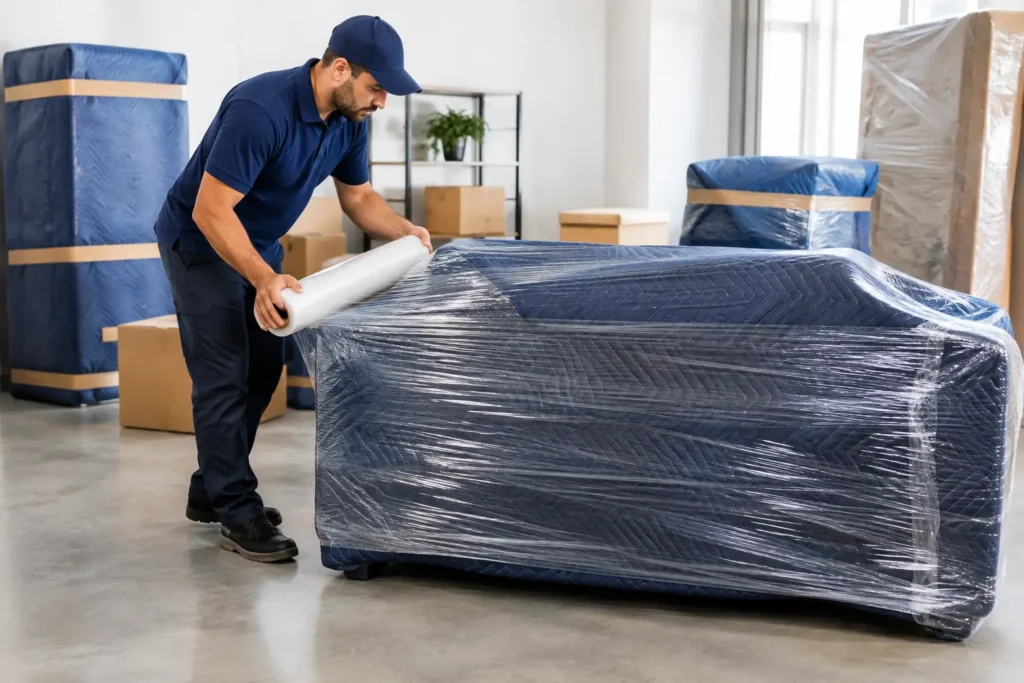
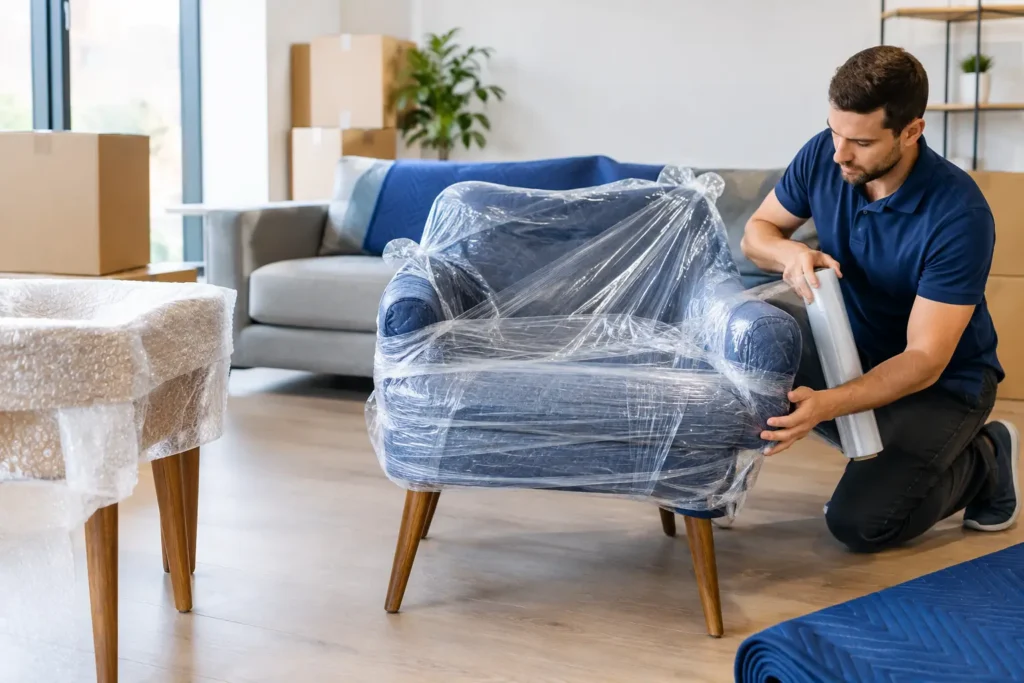
Movers also prepare furniture for the trip. Depending on the item, this may include disassembly, padding, shrink wrap, corner protection, and secure wrapping for pieces such as dressers, tables, sofas, bed frames, and chairs. Large mirrors, paintings, televisions, and artwork require added care and may be packed in specialty cartons or custom protection.
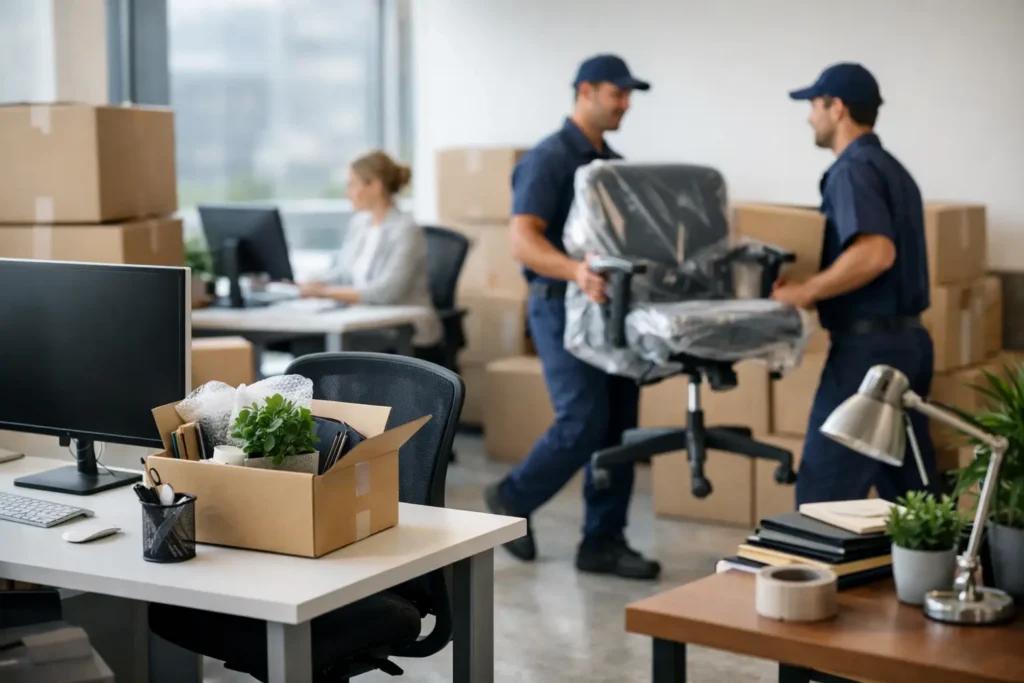
For offices, professional packing can cover files, computers, monitors, chairs, small equipment, shelving contents, and common-area supplies. A detailed labeling plan matters here. Clear labels help place boxes in the correct room or department, making the first day in a new space far more manageable.
What Movers Usually Do Not Pack
A professional moving company must follow safety requirements, insurance guidelines, and transportation rules. For that reason, there are items movers generally cannot pack or transport. These restrictions are not an inconvenience – they help prevent fire, spills, health hazards, and damage to your shipment.
Common non-allowable items include:
- Gasoline, propane tanks, lighter fluid, and other flammable fuels
- Aerosol cans, fireworks, ammunition, and explosive materials
- Paints, solvents, bleach, pesticides, and harsh chemicals
- Perishable food, open containers, and refrigerated or frozen goods for long-distance moves
- Plants, pets, and irreplaceable personal documents
Policies can vary by company and by move type, so ask for a prohibited-items list well before packing day. Local moves may allow a few items that are not permitted on a long-distance relocation, but hazardous materials should never be assumed acceptable.
Personal essentials should travel with you whenever possible. Keep passports, birth certificates, financial records, medication, jewelry, cash, sentimental heirlooms, and small valuables in a bag or locked container you control. Movers can carefully pack many valuable belongings, but some possessions are simply better kept within your reach.
Full Packing, Partial Packing, or Packing It Yourself?
You do not have to choose between packing every item alone and handing over the entire house. Many customers choose partial packing because it focuses professional help where it delivers the most value. You might pack clothing, books, and linens yourself, then have movers handle the kitchen, artwork, mirrors, electronics, and fragile collections.
Full packing is a strong option when time is tight, mobility is limited, children or work obligations make packing difficult, or the move involves many delicate items. It is also useful for a long-distance move, where boxes will spend more time in transit and may be handled more than once.
Self-packing can lower upfront moving costs, particularly for a small apartment or a move with mostly durable belongings. The trade-off is time, materials, and responsibility. Boxes that are overfilled, underfilled, poorly labeled, or packed with mismatched items can be harder to load safely and more likely to shift or crush.
A dependable moving company will explain the options clearly and build the service around your needs. The best choice is the one that gives you enough support without paying for tasks you are comfortable managing yourself.
How Movers Protect Furniture and Fragile Items
Packing is only one part of protecting your belongings. Before loading, movers assess each item for size, weight, material, and condition. A solid wood dining table needs different protection than a glass coffee table, and a leather sofa needs different handling than an upholstered sectional.
Furniture pads help protect surfaces from scratches and pressure during transport. Stretch wrap can keep padded coverings in place and secure drawers or doors when appropriate. Mattresses are typically placed in protective bags, while mirrors, glass tops, and artwork receive reinforced protection. Crews may disassemble beds, tables, or larger furniture when necessary for safe access through doorways, staircases, elevators, and hallways.
Specialty items deserve advance notice. Pianos, safes, large aquariums, antiques, pool tables, and heavy commercial equipment may require additional planning, equipment, or a dedicated moving crew. Sharing accurate details during the quote process allows the mover to prepare the right team and materials instead of making rushed decisions on moving day.
How to Prepare Before the Packing Crew Arrives
Even when professionals handle the packing, a little preparation helps the day run smoothly. Start by sorting items you no longer want. There is little value in paying to pack and move donations, expired pantry goods, broken furniture, or clothing you will not use.
Set aside the belongings that will travel with you, including documents, medications, chargers, keys, pet supplies, and a few days of clothing. If you are moving with children, keep favorite comfort items, school materials, and essential snacks separate as well.
Tell the crew about fragile, high-value, or unusual items before work begins. Point out anything that is not being moved, such as a wall-mounted television staying behind or boxes you packed yourself. If a room is off-limits, close the door or mark it clearly to avoid confusion.
Make sure walkways are clear and parking access is available. For apartment and condo moves, reserve elevators and loading areas when required. These practical details protect your schedule and give the crew room to work safely and efficiently.
Questions Worth Asking Your Moving Company
Before booking, confirm whether packing materials, labor, furniture disassembly, and basic protection are included in the estimate. Ask how fragile items are packed, how boxes are labeled, and whether the team can accommodate specialty belongings. You should also understand the company’s coverage options and any limits related to owner-packed boxes.
Clear communication matters as much as packing supplies. A company that asks about access, inventory, timing, and special handling needs is preparing for a more organized move. At Absolute Moving & Storage, careful planning and professional handling are central to reducing the stress that can come with relocation.
A well-packed move gives you a better first day at your new home or workplace. Decide which tasks you want to keep, tell your movers what needs extra care, and let a prepared crew handle the packing work that would otherwise follow you late into the night.