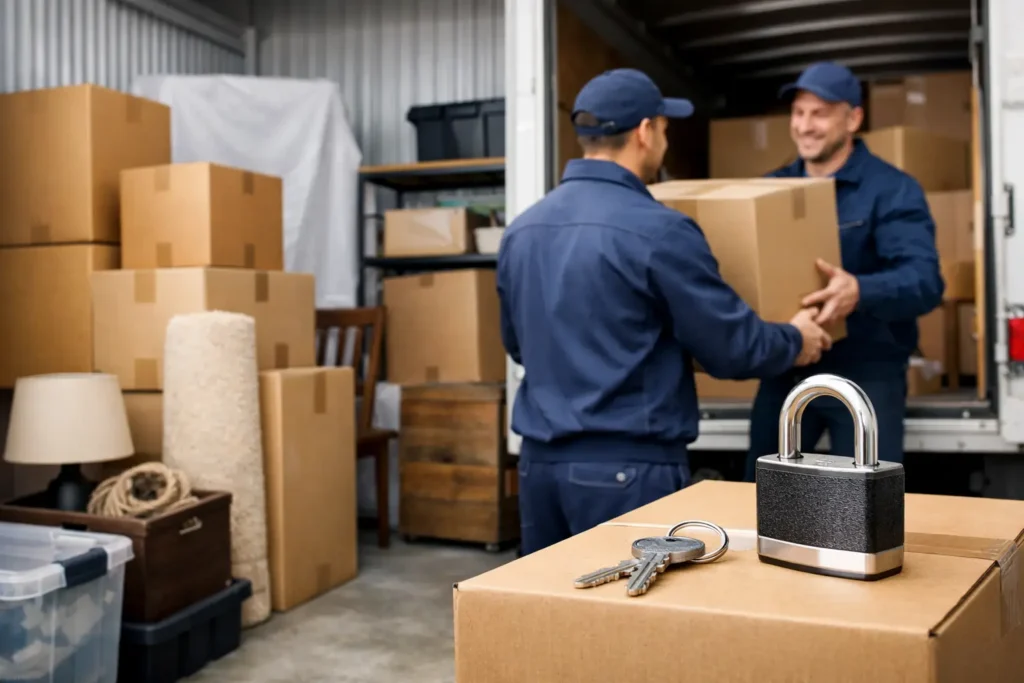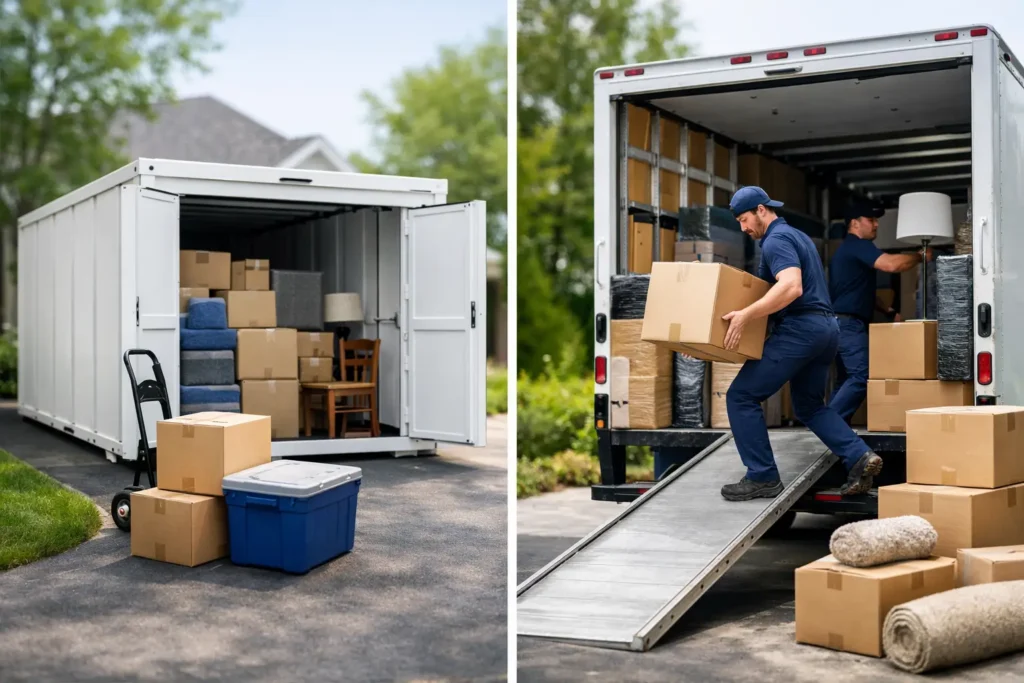
A box marked only “kitchen” can still leave you searching through six cartons for a coffee maker on your first morning. Knowing how to label moving boxes clearly gives you, your movers, and anyone helping you unpack a reliable plan from the moment packing begins. It protects fragile items, speeds up unloading, and makes your new home feel functional sooner.
The best labeling system is not complicated. It simply needs to be easy to read, consistent across every box, and detailed enough to tell you what belongs where. A few extra seconds spent labeling each carton can save hours of frustration after the truck arrives.
How to Label Moving Boxes in 4 Clear Steps
A dependable label answers four questions: Where does this box go? What is inside? How urgently will it be needed? Does it require special handling? Use the same approach throughout your home so every box communicates the right information at a glance.
1. Start with the destination room
Write the destination room in large, dark lettering on at least two sides of every box, not only on the top. Boxes are often stacked during loading and unloading, so top-only labels can disappear quickly.
Be specific when rooms have similar purposes. Instead of writing “bedroom,” use “Primary Bedroom,” “Guest Bedroom,” or “Kids’ Room.” For an office move, distinguish between “Reception,” “Accounting,” “Break Room,” and “IT Equipment.” Clear room names help movers place boxes in the correct location without stopping to ask questions throughout the day.
If your new home has a different layout, label for the destination rather than the room where the items are currently packed. A box from your current dining room may belong in a future basement storage area or home office.
2. Add a short contents description
Under the room name, list the main contents in a few practical words. “Kitchen – mugs, coffee supplies” is far more useful than “kitchen items.” You do not need to create a complete inventory on every carton, but avoid vague labels such as “miscellaneous” whenever possible.
Useful descriptions identify the type of items and their purpose. Examples include “Bathroom – towels and shower curtain,” “Living Room – lamp shades and books,” or “Closet – winter coats.” This level of detail makes it easier to find essential belongings without opening every box.
For boxes containing several categories, lead with the item you are most likely to need first. If a carton holds plates, dish towels, and serving bowls, writing “Kitchen – everyday dishes” will be more helpful than trying to list every item inside.
3. Mark priority boxes clearly
Not everything needs to be unpacked on moving day. Mark cartons with a simple priority system, such as “Open First,” “Open Soon,” and “Storage.” This helps you focus your energy after a long day of moving.
“Open First” boxes should contain what you need within the first 24 hours: basic toiletries, phone chargers, medications, bedding, a few dishes, pet supplies, children’s comfort items, and essential work materials. These boxes should be loaded last when possible, so they come off the truck early.
A separate essentials bag or suitcase is still a smart choice for irreplaceable documents, valuables, daily medication, and items you cannot risk misplacing. Labels are helpful, but keeping these belongings with you provides added peace of mind.
4. Include handling instructions where needed
Fragile, heavy, and orientation-sensitive boxes need direct instructions. Write “FRAGILE” in bold letters on multiple sides, then add a brief note when appropriate, such as “Glassware,” “Do Not Stack,” or “This Side Up.” Use these labels only when they are accurate. If every box says fragile, the message loses its value.
For heavy cartons, write “HEAVY” clearly. Pack books, tools, dishes, and dense items in smaller boxes whenever possible. A well-labeled box is safer to handle, but it should also be packed at a manageable weight.
Avoid relying on arrows alone for boxes containing fragile items. Arrows can help indicate orientation, but clear written instructions make the handling requirement easier to understand during a busy move.
Choose a Labeling Method You Will Actually Maintain
Markers and color are the most practical tools for most residential moves. Use a thick permanent marker that remains readable against cardboard, and choose one color for each destination room. For example, blue might represent the kitchen, green the primary bedroom, and yellow the living room.
Color coding works especially well when you place matching colored signs on doorframes at the new home. Movers can quickly match the box label to the room sign, which reduces misplaced cartons and unnecessary back-and-forth. Still, never rely on color alone. A written room name remains essential for anyone who is colorblind, unfamiliar with your system, or working in poor lighting.
Preprinted labels can create a cleaner look and are useful for larger moves, offices, or households with many rooms. They are most effective when paired with handwritten contents and priority notes. If labels are likely to peel in cold, wet, or dusty conditions, reinforce them with clear packing tape or write directly on the box as a backup.
For a small apartment move, a marker-based system may be all you need. For a large home or long-distance relocation, consider assigning every box a number and keeping a separate packing inventory. A simple note on your phone can track “Box 27 – Primary Bedroom – bedside lamps and linens.” This takes more time, but it can be valuable when items will be in storage or when you need a detailed record for a complex move.
Label Boxes Before You Seal Them
One common mistake is waiting until every room is packed. At that point, fatigue sets in, boxes begin to look alike, and labels become less accurate. Label each carton as you fill it, then review the writing before sealing the box.
Place your room label and contents description on two sides. Add handling notes before taping the top shut. Once sealed, write the box number if you are using an inventory and add your priority designation. This routine keeps packing organized and prevents the familiar “I know it is in one of these boxes” problem.
It also helps to keep boxes from different rooms separate while packing. Designate an area for completed kitchen boxes, another for bedroom boxes, and so on. Mixing rooms in the same box might seem efficient when you are short on space, but it creates extra work during unloading and unpacking.
Do Not Forget Furniture Parts and Electronics
Some of the most frustrating moving-day problems come from small parts that are separated from the furniture or electronics they belong to. Put screws, brackets, remotes, cords, and hardware into labeled resealable bags. Then tape the bag securely to the corresponding furniture piece or place it in a clearly labeled “Hardware” box.
For electronics, take a quick photo of cable connections before disconnecting anything. Label cords by device when possible, especially for televisions, desktop computers, routers, and office equipment. Write the device name directly on the bag or use a small piece of masking tape around the cable.
If a professional moving team is disassembling furniture, point out any hardware bags and explain your system before loading begins. Clear communication helps ensure the right parts travel with the right items.
Make Unloading Easier for Everyone
A labeling system works best when it is shared. Before moving day, provide movers with a quick overview of your color coding, priority boxes, and any items requiring extra care. At the new home, place room signs where they can be seen from the entrance or hallway.
Keep pathways clear and make sure someone is available to answer placement questions. A box placed in the right room is helpful; a box placed near the area where it will be unpacked is even better. For example, kitchen boxes can go near the counters, while bedroom linen boxes can be placed close to the appropriate closet.
Professional movers can handle the lifting, transport, and careful placement, but accurate labels give them the information needed to work efficiently. At Absolute Moving & Storage, careful planning and clear communication are part of helping customers feel confident throughout the relocation process.
Your labels do not have to be perfect or decorative. They simply need to make the next decision easier: where to carry the box, how to handle it, and when to open it. When every carton answers those questions, your move begins to feel less like a pile of cardboard and more like a well-organized fresh start.