A moving quote can look appealing until the first damaged box, delayed pickup, or unexpected injury claim exposes what was left out. The difference between insured versus uninsured movers is not simply a line item on a website. It can shape who is accountable when something goes wrong, how your belongings are handled, and how much stress you carry on moving day.
A professional mover should be prepared to discuss licensing, liability coverage, valuation options, and the process for handling a claim. If a company avoids those questions, offers an unusually low price with little documentation, or asks for a large cash payment upfront, that is a reason to pause before booking.
Insured Versus Uninsured Movers: The Practical Difference
An insured moving company carries business insurance designed to protect its operations and address certain risks associated with moving. Depending on the company and its services, this may include commercial vehicle insurance, general liability coverage, cargo coverage, workers’ compensation coverage, or other policies required for its work.
That coverage matters because moving involves real risk. Furniture is carried through narrow hallways. Trucks travel busy roads. Heavy items such as pianos, safes, appliances, and solid-wood furniture require trained handling. A reliable mover plans for these risks rather than assuming every move will go perfectly.
An uninsured mover may be an individual with a truck, an informal labor crew, or a company that has not maintained the proper coverage for the services it advertises. Some may be well-meaning, but good intentions do not create a clear path to compensation after an accident. If property is damaged, a worker is injured, or a vehicle incident occurs, the customer may face delays, disputes, or expenses that a properly insured provider is better equipped to manage.
Insurance alone does not guarantee excellent service. A company can be insured and still communicate poorly or handle items carelessly. But insurance is a basic sign that a mover takes responsibility for the work and has built safeguards into its business.
Insurance Is Not the Same as Full Value Protection
This is where many customers get surprised. When a mover says it is insured, that does not automatically mean every item is covered for its full replacement value. Movers may offer different levels of liability or valuation protection, and the details can vary based on local rules, the type of move, and the company policy.
Basic coverage may provide only limited compensation based on an item’s weight or another set formula. That may be far less than the cost of replacing a television, antique dining table, artwork, or high-end computer equipment. Additional valuation protection or third-party coverage may be available for customers who want broader protection.
Before moving day, ask what protection is included in the quote, what optional coverage is available, and whether there are exclusions. Items packed by the owner, fragile belongings, electronics, jewelry, cash, and high-value collections may have different rules. The best time to understand these terms is before your belongings are loaded, not after a problem occurs.
For valuable or sentimental items, consider transporting them yourself when practical. Documents, medications, family heirlooms, and irreplaceable photographs deserve extra planning even when you hire a fully insured moving company.
Why Uninsured Movers Can Cost More Than Their Quote
A low price can be tempting when you are balancing deposits, utility transfers, cleaning, and other moving expenses. Yet an uninsured mover’s quote may leave out the costs that surface later: damage with no clear resolution, a missed delivery window, rented equipment, or a dispute over an item that was never documented.
The financial risk is only part of the issue. If a mover is injured while carrying your furniture and lacks appropriate worker coverage, questions about responsibility can become complicated. If their truck breaks down, there may be no backup plan. If they damage a building’s elevator, hallway, or loading area, the property manager may expect a prompt response that an informal operator cannot provide.
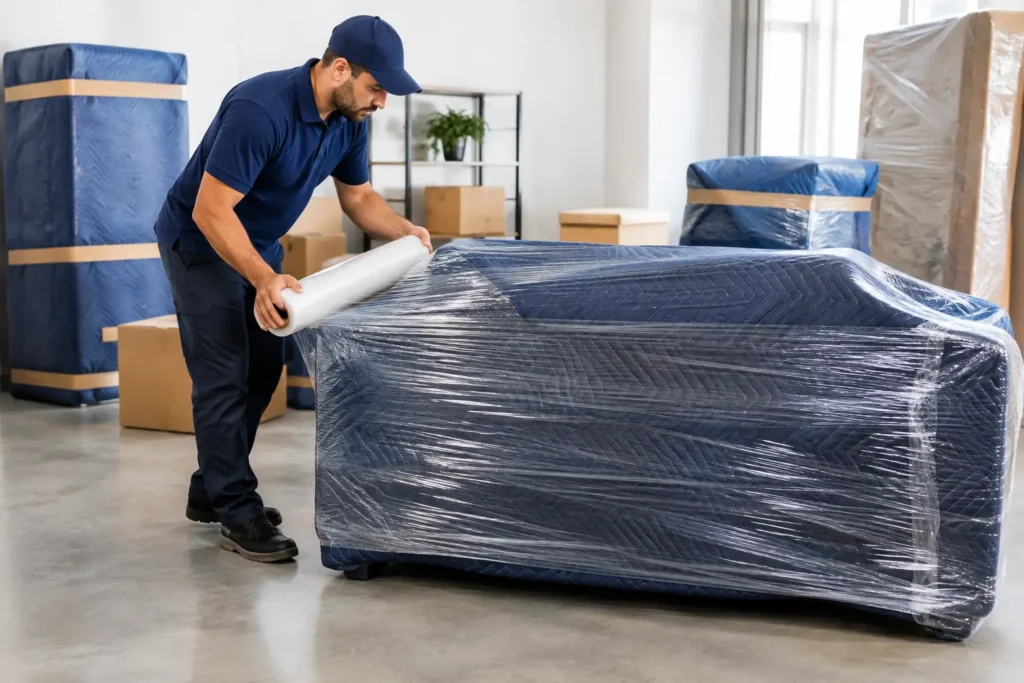
Professional movers typically have established procedures for these situations. They inspect access points, use floor runners and furniture protection when needed, secure loads properly, maintain equipment, and document the condition of items. Those steps do not remove every possibility of damage, but they reduce avoidable problems and give you a clearer process if an issue arises.
What to Ask Before You Hire a Moving Company
You do not need to become an insurance expert to make a confident choice. A few direct questions will reveal whether a moving company is organized, transparent, and ready to stand behind its service.
Ask whether the company is licensed for the type of move you need and whether it carries commercial insurance. Request a written estimate that explains what is included, such as labor, truck time, travel time, packing materials, fuel charges, stairs, long carries, storage, or specialty-item handling.
Then ask how the company handles damage claims. A trustworthy mover should be able to explain the reporting process, the time frame for filing a claim, the valuation coverage included with your move, and any options for additional protection. Clear answers are a sign of a company that has systems in place.
It also helps to ask who will perform the move. Some companies use trained in-house crews, while others rely on temporary labor or third parties. There can be legitimate reasons for using additional crews on larger moves, but you deserve to know who will enter your home or office and who is accountable for the work.
Finally, confirm the pickup and delivery plan in writing. For local moves, this may mean confirming the arrival window, hourly rates, and minimum hours. For long-distance moves, ask about delivery timing, tracking, storage arrangements, and who will be your point of contact if plans change.
Warning Signs That Deserve a Second Look
Not every inexpensive mover is uninsured, and not every polished website represents a dependable company. Look beyond advertising and pay attention to how the business operates.
Be cautious when a mover cannot provide a written estimate, refuses to explain coverage, or gives vague answers about who is responsible for damage. Other warning signs include a demand for a large nonrefundable deposit, a cash-only payment request, no physical business information, or a quote that is dramatically lower than every other estimate.
Watch for rushed paperwork, too. A professional company should give you time to review the agreement and ask questions. Never feel pressured to sign a blank or incomplete document. The details on the estimate and moving agreement are there to protect both you and the mover.
Choosing Protection That Fits Your Move
The right level of protection depends on what you are moving and how far it is traveling. A small apartment move with mostly replaceable furnishings may require a different approach than a family home move, an office relocation, or a long-distance shipment with specialty items.
For a larger move, take photos of valuable furniture and electronics before packing. Create a simple inventory, especially for items going into storage or traveling long distance. Tell the mover about oversized pieces, narrow staircases, elevators, parking restrictions, and items requiring special handling. Accurate information leads to a more accurate quote and a safer moving plan.
If packing services are part of your move, ask how fragile items will be packed and labeled. Professional packing can reduce risk because the crew uses appropriate materials and knows how to prepare items for transport. If you pack yourself, use sturdy boxes, avoid overloading them, and label fragile cartons clearly.
At Absolute Moving & Storage, careful planning, trained handling, and clear communication are treated as essential parts of a dependable relocation. Whether you are moving a studio apartment, a family home, or an office, the goal should be the same: know who is responsible for your belongings before the truck arrives.
A well-chosen mover gives you more than extra hands and a vehicle. It gives you a documented plan, accountable professionals, and the confidence to focus on settling into your next space.