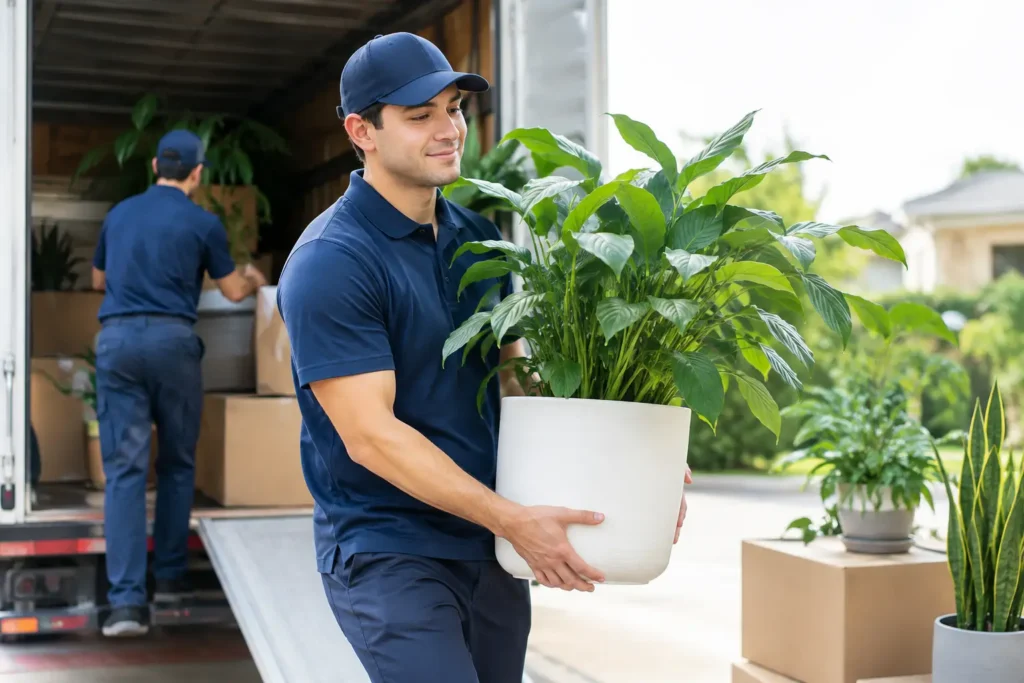
A favorite fiddle-leaf fig or a mature herb garden can feel less like decor and more like part of your home. So, can movers move plants long distance? Sometimes, but many professional moving companies cannot transport live plants across state or international borders. The restriction is not about a lack of care. It usually comes down to agricultural regulations, changing weather conditions, and the difficulty of keeping living plants healthy in a moving truck.
Before you plan your relocation around your houseplants, ask your moving company directly whether plant transport is available for your specific route. A clear answer early in the process helps prevent last-minute decisions at loading day.
Why long-distance movers may not take plants
Live plants present a unique challenge during a long-distance move. Household goods can be packed, secured, and protected inside a truck. Plants need airflow, stable temperatures, light, water, and careful handling – conditions that are difficult to guarantee during a trip that may take several days.
Many moving trucks are not climate-controlled in the cargo area. Plants may be exposed to heat, freezing temperatures, darkness, or significant temperature swings while the truck is in transit. Even a healthy plant can be damaged by a few hours of extreme cold or heat.
There is also a legal concern. Plants and soil can carry insects, fungi, and other pests that may not be permitted in a new region. State, provincial, and international agricultural rules are designed to prevent invasive species and plant diseases from spreading. For that reason, a carrier may decline all live plants, even when the move is otherwise fully serviced.
Insurance is another factor. Most moving coverage is designed for furniture and personal property, not living items that can decline naturally during transport. If a plant arrives wilted, frozen, or infested, determining the cause and responsibility can be difficult.
Can movers move plants long distance across state lines?
The answer depends on the destination, the type of plant, and the mover’s policies. Some local moving companies may agree to move plants over a short distance when the weather is mild and the plants can be loaded last and unloaded first. Long-distance moves are different because transit times are longer and routes may cross multiple jurisdictions.
For interstate moves, regulations can vary by destination. Certain states have strict rules for outdoor plants, citrus trees, soil, and plants that could carry regulated pests. A plant that is acceptable to transport from one area may require inspection, documentation, or special handling before entering another.
International moves are even more restrictive. Customs and agricultural agencies may require permits, certificates, inspections, or quarantine. In many cases, bringing houseplants across an international border is not practical. Never assume that a plant can travel simply because it is for personal use.
Your mover can explain its own policy, but it is wise to confirm destination requirements independently before making plans. This is especially relevant when moving a plant collection, outdoor landscaping plants, fruit trees, or anything kept in garden soil.
The safest options for taking plants with you
If your mover cannot transport plants, you still have choices. The best option depends on the distance, season, size of your collection, and how much responsibility you can take on during travel.
For small, hardy houseplants, carrying them in your personal vehicle is often the safest approach. You can control the temperature, keep them upright, and bring them indoors during overnight stops. Avoid leaving plants in a parked vehicle, where temperatures can become dangerous quickly.
If you are flying, check the airline’s current rules before arriving at the airport. Small plants may sometimes be allowed in carry-on luggage, but soil, water, plant size, and destination regulations can affect what is permitted. Plants that cannot travel in the cabin may face unsuitable conditions in checked baggage.
For large, valuable, or delicate plants, consider working with a specialized plant shipping service or a local nursery that offers relocation support. This option can cost more, but it may be worthwhile for rare specimens, established indoor trees, or plants with sentimental value.
When a plant is difficult to move, propagation can be a practical alternative. Taking cuttings from a beloved pothos, philodendron, succulent, or herb plant may let you bring a piece of it to your new home without transporting the entire plant. It is also worth asking friends, neighbors, or a local plant group whether they can care for plants you cannot take.
How to prepare plants for a move in your own vehicle
A little preparation can make a major difference. Start one to two weeks before moving day by checking every plant for insects, sticky residue, spots, or signs of disease. Treat problems before the trip so you do not bring pests into your new home or violate destination restrictions.
Water plants a day or two before travel rather than immediately before loading them. The soil should be lightly moist, not soaked. Wet pots are heavier, messy, and more likely to spill in the vehicle. Remove decorative ceramic pots when possible and place plants in lightweight plastic nursery pots for the trip. Wrap fragile containers separately and repot after you arrive.
Prune dead leaves and remove fallen debris from the soil surface. For tall plants, loosely tie stems or branches with soft fabric strips to reduce movement. Smaller pots can be placed in open boxes with towels, packing paper, or cardboard dividers around the base. Do not seal plants inside boxes or plastic bags for extended periods, since they need airflow.
Keep plants upright on a flat surface, ideally inside the cabin rather than in a trunk or enclosed cargo area. Protect them from direct blasts of air conditioning or heat. If your trip includes overnight stops, bring the plants inside whenever temperatures are likely to drop below 50 degrees or rise above 85 degrees.
What not to do with moving plants
Avoid putting live plants on a moving truck without the mover’s written approval. Even if there seems to be extra space, an unauthorized plant can create delays, violate company policy, and leave you without a clear plan if the plant is damaged.
Do not fertilize right before moving. Fertilizer can encourage new growth at a time when the plant is already under stress. Wait until the plant has settled into its new environment and shows signs of healthy recovery.
It is also best not to repot immediately before a long trip. Repotting disrupts roots, and combining that stress with travel can make recovery harder. If a pot must be changed for safety, do it carefully and give the plant several days to adjust before departure when possible.
Finally, be realistic about plants that are oversized, unhealthy, or highly sensitive. A six-foot tropical plant may be possible to move in a personal vehicle, but a cross-country winter drive could still be risky. Sometimes replacing a common plant at your destination is the more dependable choice.
Build plants into your moving plan early
Plant transport should be discussed during the estimate stage, along with specialty furniture, artwork, appliances, and storage needs. Tell your moving coordinator how many plants you have, their approximate sizes, and whether your move crosses state or national borders. That conversation allows the team to explain what can be moved, what must travel with you, and how to plan the loading sequence around your other belongings.
At Absolute Moving & Storage, careful planning is central to reducing surprises on moving day. While live-plant policies can vary by route and regulation, a professional moving team can help you understand where plants fit into the larger relocation plan and protect the rest of your household items with organized, attentive service.
Your plants may need a separate travel plan, but they do not have to become a source of moving-day stress. Decide early which ones will travel with you, which ones need specialized support, and which ones are best passed on. That gives every plant its best chance to thrive in the next place you call home.