A box that is too large, too thin, or packed beyond its limit can turn an organized move into a frustrating cleanup job. The best boxes for moving house are not simply the cheapest ones you can find. They are the right sizes, strengths, and shapes for what you own, packed with enough protection to arrive safely.
For most households, a small selection of quality moving boxes works better than buying dozens of identical cartons. Heavy books need compact, sturdy boxes. Bedding and lampshades need larger, lighter-load boxes. Fragile kitchenware needs double-wall protection and careful packing. Matching the box to the item helps prevent damage, makes loading safer, and saves time when you unpack.
Start With Strong, Clean Moving Boxes
Moving boxes are designed to stack, carry, and protect household goods in a way that many used retail boxes are not. New cartons provide the most dependable option because their seams, flaps, and corrugated walls have not been weakened by moisture, tape removal, or previous use.
Used boxes can still be a practical choice for lighter, low-risk items if they are clean, dry, odor-free, and in excellent condition. Inspect every box before packing it. If the corners are crushed, the bottom is soft, or the cardboard bends easily, do not trust it with items you would be upset to replace.
Double-wall boxes are worth the additional cost for fragile, valuable, or dense belongings. Their extra layer of corrugated cardboard provides better resistance to punctures and compression during loading, transport, and stacking. Standard single-wall boxes can work well for clothing, linens, toys, and other lightweight household items.
The Best Boxes for Moving House by Item Type
No single box size suits every room. Choosing a variety of cartons helps you pack more safely and keeps the overall load manageable for you or your movers.
Small boxes for books, tools, and heavy items
Small boxes are the workhorses of a well-planned move. Use them for books, canned goods, hand tools, records, small kitchen appliances, and other dense belongings. A box may look modest, but it can become difficult to lift quickly when filled with paperbacks or dishes.
Keep heavy boxes to a comfortable carrying weight. If you cannot lift the box steadily from the floor without straining, it is too heavy. Use packing paper to fill gaps, but do not add excess weight simply to use up available space.
Medium boxes for everyday household goods
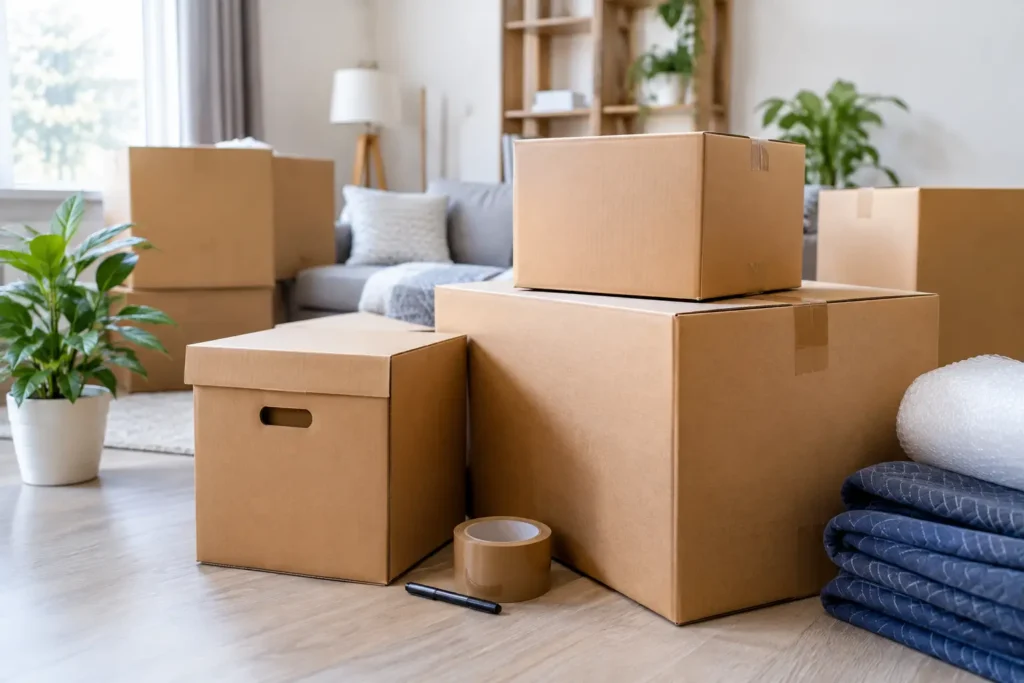
Medium cartons are usually the most versatile option. They are well suited to pots and pans, pantry items, toys, shoes, folded clothes, small décor pieces, and bathroom supplies. Most homes need more medium boxes than any other size because they handle a wide range of items without encouraging overpacking.
For mixed household goods, place the heaviest items at the bottom and lighter items on top. Fill empty spaces with packing paper, towels, or clothing so contents do not shift in transit. The goal is a full box that still closes flat and lifts safely.
Large boxes for light, bulky belongings
Large moving boxes are useful, but they have one clear rule: fill them with light items only. Pillows, comforters, blankets, stuffed animals, winter coats, lampshades, and bulky plasticware are good candidates.
Avoid using large boxes for books, dishes, or heavy electronics. Even a strong box can become unsafe when it is overloaded. Large cartons are also more likely to bow at the sides if they are packed unevenly or used as the bottom of a tall stack.
Wardrobe boxes for hanging clothes
Wardrobe boxes have a built-in hanging bar that lets you transfer clothing directly from your closet. They are especially helpful for suits, dresses, coats, formalwear, and garments that wrinkle easily. They also reduce the time needed to unpack and rehang clothes at your new home.
Wardrobe boxes cost more than standard cartons and take up more truck space, so they may not be necessary for every closet. If budget matters, use them for your most delicate hanging items and fold the rest into medium boxes or suitcases.
Dish packs for kitchenware and glass
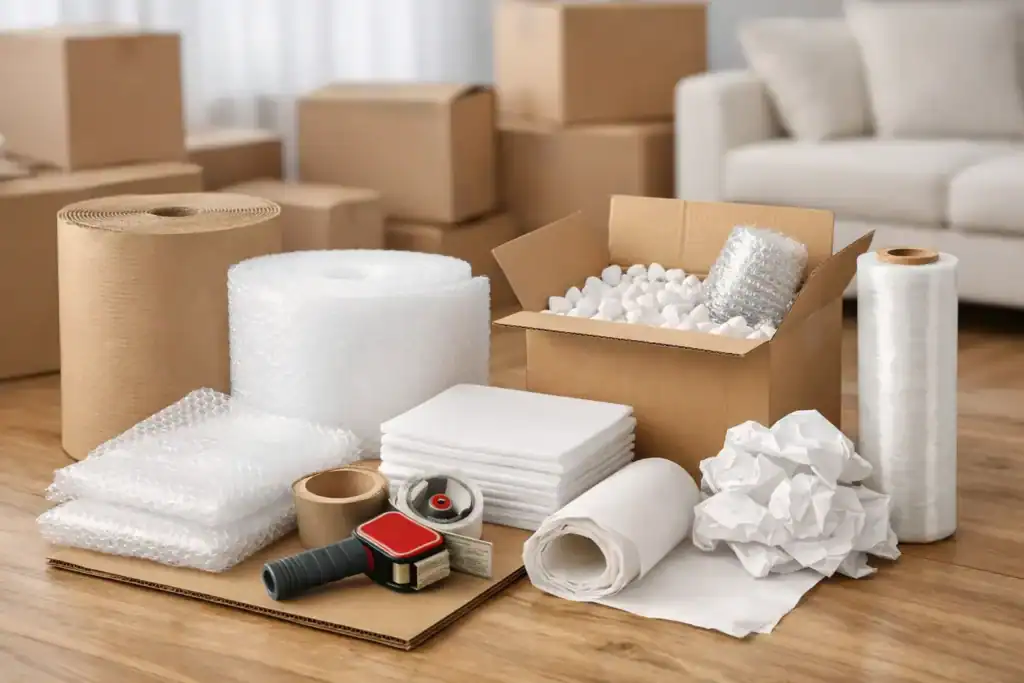
The kitchen is often where moving damage happens. Dish pack boxes, sometimes called dish barrels, use heavier-duty cardboard to protect plates, glasses, mugs, serving dishes, and small appliances. Pair them with packing paper, sturdy dividers, and enough cushioning at the bottom and top.
Wrap dishes individually and pack them vertically rather than flat when possible. Plates are better able to handle pressure on their edges than on their broad surfaces. Keep glassware upright, fill hollow pieces with paper, and label every carton clearly as fragile.
Specialty boxes for mirrors, TVs, and artwork
Flat, fragile items need purpose-built protection. Picture and mirror boxes are adjustable cartons that protect framed art, mirrors, and wall décor. TV boxes should match the screen size closely and include foam corners or other padding to prevent movement.
Original manufacturer packaging is often an excellent choice for electronics because it was designed for that specific item. If you no longer have it, use a properly sized specialty box rather than trying to force a television or large mirror into an oversized carton.
How Many Moving Boxes Do You Need?
The number depends on your home size, how much you have accumulated, and how much you plan to move yourself. A minimalist one-bedroom apartment may need far fewer boxes than a family home with a basement, garage, and years of stored belongings.
Instead of relying only on a general box estimate, walk through each room and count what must be packed. Open closets, cabinets, storage bins, and drawers. Most people underestimate kitchenware, books, linens, seasonal clothing, and garage items because they are spread across multiple areas.
Build in a small buffer for last-minute packing. You will likely find items that cannot travel loose, such as cleaning supplies, chargers, pantry goods, loose décor, and paperwork. Having a few extra medium and small boxes is preferable to rushing on moving day with weak or poorly sized cartons.
Pack Each Box for Safe Handling
The quality of the carton matters, but the way you pack it matters just as much. Reinforce the bottom of every box with packing tape, especially used boxes and cartons carrying heavier items. Run tape along the center seam and across it in both directions for added support.
Use packing paper or clean towels to cushion items and eliminate empty pockets. Boxes should feel full enough that contents do not rattle, but they should not bulge or resist closing. Bulging flaps are a sign that the box is under strain and may not stack safely.
Label the top and at least one side of each box with the destination room and a brief description of the contents. Write handling instructions such as “Fragile,” “This Side Up,” or “Heavy” when needed. Specific labels help movers place cartons efficiently and help you find essentials without opening every box.
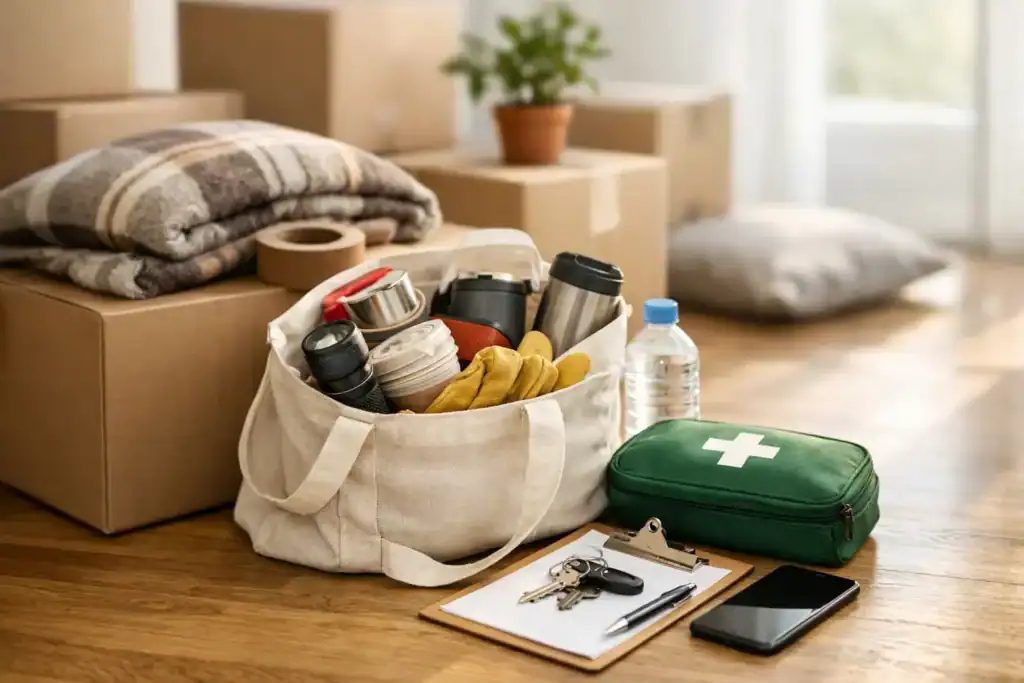
Keep a separate essentials box or bag for the first day in your new home. Include medications, important documents, chargers, basic toiletries, snacks, pet supplies, and a change of clothes. This is not a box for the moving truck if you can avoid it – keep it with you.
Avoid Common Box Mistakes
A few packing shortcuts create unnecessary risk. Do not pack boxes with only one type of item if doing so makes them dangerously heavy. For example, it is better to mix a layer of books with lighter belongings than to fill an entire large carton with hardcovers.
Do not leave boxes unsealed because you expect a short move. Even local moves involve loading ramps, turns, stairs, and stacked truck loads. A properly taped and labeled box protects your belongings from more than distance alone.
It is also wise to avoid packing hazardous or restricted items into standard moving boxes. Items such as gasoline, propane tanks, fireworks, certain chemicals, and aerosol products may not be safe or permitted on a moving truck. Ask your moving company in advance about items that require special handling or cannot be transported.
When Professional Packing Is Worth Considering
Packing an entire home takes longer than most people expect, particularly when fragile belongings, antiques, artwork, or large furniture are involved. Professional packers can supply appropriate cartons, wrap delicate items correctly, and prepare your home for loading on a defined schedule.
This service can be especially valuable for busy families, seniors, long-distance moves, office relocations, or anyone facing a tight closing date. Absolute Moving & Storage can help customers plan the right level of packing support, from selected rooms to full-home packing, with careful handling throughout the move.
The right moving boxes give your belongings a safer start and make every stage after packing easier. Choose sturdy cartons, use the proper size for each item, and pack with lifting and stacking in mind. A little care before the truck arrives can make your new home feel settled much sooner.