A low quote can look great until moving day runs long, fragile items need extra care, or the truck shows up without the right crew. That is why understanding packing and moving services cost matters before you book. Price is part of the decision, but so are protection, timing, labor, and the confidence that your belongings will be handled properly.
For most households and businesses, the real question is not just, “What will this move cost?” It is, “What am I paying for, and will it make the move easier and safer?” Full-service moving is designed to reduce stress, physical strain, and avoidable delays. When the work is organized well, your move feels controlled instead of chaotic.
What affects packing and moving services cost?
Packing and moving services cost usually depends on a few core factors: how much you are moving, how far you are going, how much packing help you need, and whether there are any special handling requirements. A studio apartment with basic boxes and local delivery will naturally cost less than a four-bedroom house with specialty furniture, stairs, storage, and a long-distance route.
The size of the move has a direct impact on labor hours, truck space, packing materials, and scheduling. More items mean more wrapping, more loading time, and more unloading time. If your home is well organized and decluttered before the movers arrive, that can help keep the job more efficient.
Distance also changes the pricing model. Local moves are often based on time, crew size, and truck use. Long-distance moves tend to factor in mileage, fuel, route planning, travel time, and the complexity of delivering on a larger schedule window. The farther the move, the more important it is to get a detailed quote that reflects the full scope of the job.
Then there is access. A downtown condo with elevator booking rules, limited parking, and long carrying distances may require more time than a house with a clear driveway. The same is true for tight stairwells, multi-level homes, and buildings with strict loading times. These details are easy to overlook when comparing quotes, but they can affect both price and the overall moving experience.
What is usually included in packing and moving services cost?
This depends on the company and the level of service you choose. In many cases, packing service includes labor, standard packing materials, wrapping for furniture, labeling, loading, transport, unloading, and basic setup based on the agreed scope. Some customers want everything packed room by room, while others only need help with fragile items, large furniture, or the kitchen.
That flexibility matters because not every move needs the same approach. If you are comfortable boxing up clothing, books, and everyday items, you may only want professionals to handle breakables, artwork, electronics, or heavy pieces. On the other hand, families on tight timelines and businesses trying to limit downtime often benefit from a full packing service because it keeps the move organized from start to finish.
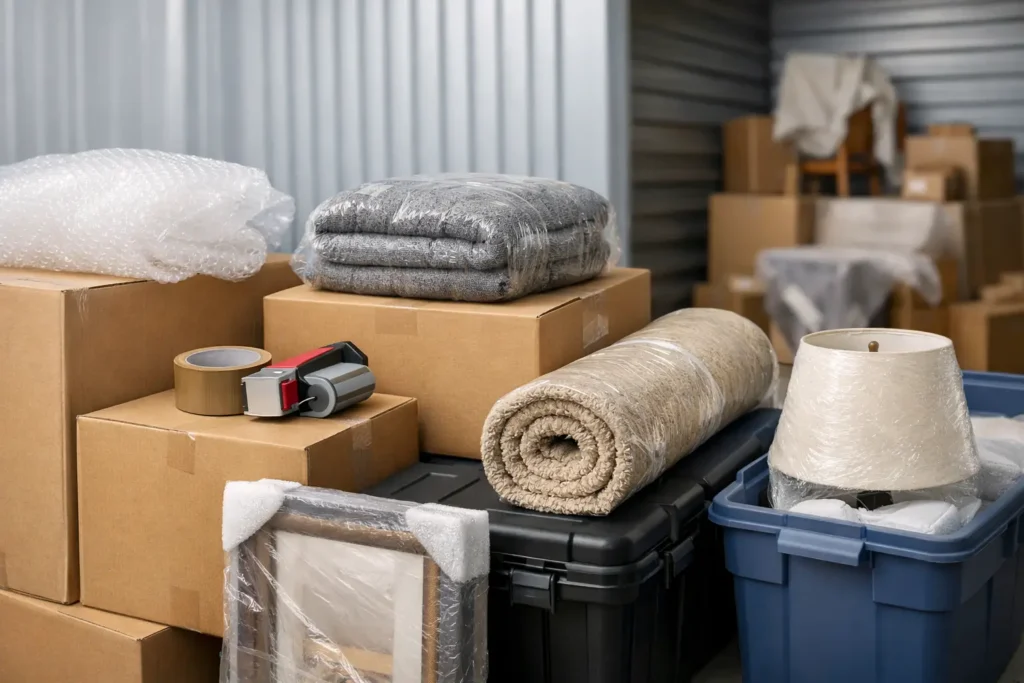
It is also worth asking what materials are included. Boxes, tape, wrapping paper, mattress bags, wardrobe cartons, and protective padding may be part of the quote, or they may be listed separately. Neither approach is automatically better, but clear pricing is. The best quotes spell out what is covered so you can compare providers fairly.
Local vs. long-distance moving costs
A local move typically has more predictable timing if access is straightforward and the inventory is clear. Movers can usually estimate crew hours based on your space, your item count, and the level of packing required. If the move is nearby, transport time may be a smaller part of the total than labor and materials.
Long-distance moves are different. The route, delivery schedule, fuel, weather, and travel logistics all play a bigger role. If you also need short-term storage between move-out and move-in dates, that adds another layer to the quote. Storage can be a practical solution, but it should be planned early so your timeline and budget stay aligned.
For customers moving across Western Canada or beyond, the safest choice is often a company that can manage packing, transport, storage, and communication under one roof. Fewer handoffs usually mean fewer chances for delays, confusion, or damage.
Why the cheapest quote is not always the lowest cost
Moving is one of those services where the lowest number on paper can become the highest price in practice. If a quote leaves out packing materials, stair fees, heavy-item handling, travel time, or insurance details, your final bill may look very different from the original estimate.
There is also the cost of risk. Poor packing can lead to broken dishes, damaged furniture, and scratched floors. An unreliable schedule can mean missed elevator bookings, extra days off work, or overlap with cleaners, tenants, or property managers. Those problems are expensive in ways that do not always show up in the initial quote.
Professional movers bring more than muscle. They bring systems, training, proper equipment, and accountability. Licensed and insured service matters because it gives you a higher level of protection and a clearer process if something unexpected happens. That peace of mind is part of the value.
How to budget for packing and moving services cost
Start with a realistic inventory. Walk through each room and note what actually needs to be packed, moved, disassembled, protected, and reassembled. Large sectionals, gym equipment, safes, glass tabletops, and antiques should all be identified upfront. Surprises on moving day often lead to delays and pricing changes.
Next, decide where you want professional help to make the biggest difference. Some customers save money by packing non-fragile items themselves and hiring movers for loading, transport, and delicate pieces. Others would rather pay more for full packing because their schedule, family demands, or move complexity makes that the smarter option. There is no single right answer. The best choice depends on your time, budget, and tolerance for stress.
You should also leave room in your budget for timing issues. Closing dates shift, possession dates get delayed, and elevator reservations do not always go as planned. A small cushion can make those adjustments easier to manage without turning the move into a scramble.
Questions to ask before you book
A good quote should be easy to understand. Ask whether the estimate is based on hourly labor, inventory, distance, or a combination of factors. Confirm what packing materials are included, whether furniture protection is part of the service, and how specialty items are priced.
It also helps to ask about insurance coverage, cancellation terms, storage options, and arrival windows. If you are moving from a condo or office, mention elevator access, loading dock rules, and parking limitations early. The more accurate the information, the more accurate the quote.
This is where communication becomes just as important as price. A dependable mover should be able to explain the process clearly, outline what happens on moving day, and answer questions without making you feel rushed. That kind of support is especially valuable for first-time movers and busy families trying to coordinate multiple deadlines.
When full-service packing is worth it
Full-service packing is often worth the investment when time is limited, the home is large, or the move includes fragile or high-value items. It is also a strong option for seniors, families with young children, and businesses that need to stay focused on work instead of spending days boxing up equipment and files.
There is a practical advantage too. When packing is done professionally, labeling tends to be clearer, truck loading is more efficient, and unpacking is easier to manage. That does not mean every move needs the full package. But when the goal is a smoother, more controlled relocation, professional packing can reduce both the workload and the number of things that go wrong.
Companies like Absolute Moving & Storage build value here by combining careful handling, insured service, and clear communication across the entire move. That combination often matters more than shaving a small amount off the quote.
The right cost is the one that matches the service
Packing and moving services cost should make sense in relation to the work being done. If your movers are protecting furniture properly, showing up on time, communicating clearly, and handling your move with care, that is money spent on fewer headaches, less risk, and a better overall result.
The best move is not always the cheapest one. It is the one that fits your timeline, protects your belongings, and gives you confidence from the first quote to the final box placed in your new space. When you compare options with that in mind, the numbers become much easier to judge.