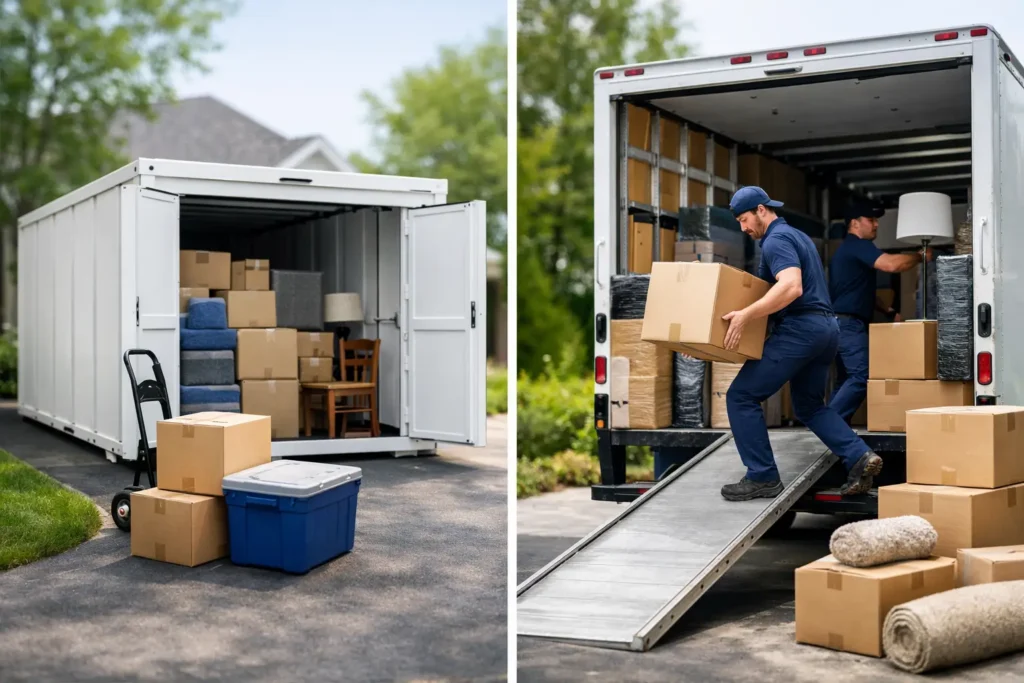
A move can look affordable on paper until you account for the work that happens between getting the keys and settling into your new space. When comparing storage containers vs movers, the real question is not simply which option costs less. It is which option gives you the right amount of help, protection, and control for the move you are planning.
Portable storage containers can be a practical choice for people who want to pack on their own schedule and handle most of the physical work themselves. Professional movers are often the better fit when time is tight, furniture is heavy, access is difficult, or you want trained crews to take responsibility for the details. Both can work well, but they solve different problems.
Storage Containers vs Movers: The Core Difference
A storage container company typically delivers a portable container to your home. You load it, keep it on-site for a period of time or have it transported to a storage facility, and arrange delivery to your destination when you are ready. Some providers offer multiple container sizes and flexible storage periods.
A full-service moving company provides the people and equipment needed to complete the move. Depending on the service you choose, professional movers can pack your belongings, protect furniture, load the truck, transport everything, unload at the new location, and place items in the rooms you choose. If your move has a gap between homes, a mover may also arrange secure storage.
The container model gives you more control over timing and labor. The professional moving model gives you more support and accountability throughout the relocation. Neither is automatically right for every household or business.
When a Storage Container Makes Sense
A portable container can be useful when your schedule is uncertain. Perhaps your home sale closes before your new property is ready, you are renovating, or you want several days to sort and pack without a moving crew working around you. Having the container nearby allows you to load gradually.
This option may also suit a small move with straightforward access. If you are moving from a ground-floor home with driveway space, have friends or family available to help, and do not have unusually heavy or delicate items, self-loading can feel manageable.
Containers can create savings when you are prepared to do the labor yourself. However, compare the complete cost rather than the initial delivery price. Your total may include container delivery and pickup, monthly storage, transportation, coverage options, locks, moving supplies, and any parking or permit requirements. You may also need to rent dollies, furniture pads, or additional help for heavy lifting.
The practical limits of container moving
The biggest challenge is physical effort. Loading a container safely requires more than carrying boxes. Furniture needs to be wrapped, balanced, and secured so it does not shift in transit. Heavy items must be loaded in the proper order, and weight needs to be distributed evenly. A poorly packed container can lead to damaged belongings or a difficult unloading day.
Placement can also be an issue. You need enough legal, accessible space for the container, which is not always available at apartments, condos, busy streets, or properties with strict homeowners association rules. Bad weather, stairs, narrow hallways, long carries, and limited elevator reservations can make a self-service plan much harder than expected.
When Professional Movers Are Worth It
Hiring movers is about more than having someone lift boxes. A qualified moving crew brings trained handling, proper equipment, protective materials, loading experience, and an organized plan for completing the job efficiently. That can reduce the chances of damage, injury, missed timing, and last-minute surprises.
Professional moving support is especially valuable when you have large furniture, fragile pieces, antiques, appliances, gym equipment, pianos, or other specialty items. These belongings often require specific wrapping, disassembly, equipment, and loading techniques. Trying to move them without the right tools can damage the item, your home, or the people helping.
Movers are also a strong choice for households with a fixed move-out date. If your lease ends on Friday, possession begins on Saturday, and elevator access is booked for a narrow window, an experienced crew can keep the work moving. They can also help coordinate packing, transportation, and storage rather than leaving you to manage separate providers.
For business relocations, professional help is often the more responsible option. Offices may have desks, electronics, files, shelving, and downtime concerns that require clear planning. A trained moving team can help organize the move so employees can return to work with less disruption.
What you are paying for
A professional moving quote reflects labor, equipment, transportation, planning, and the company’s responsibility for handling your property. Licensed and insured movers should explain what is included, what may affect the final cost, and what protection options apply.
The lowest quote is not always the best value. Ask whether packing materials, furniture protection, stairs, long carries, fuel, storage, and specialty-item handling are included or billed separately. Clear communication before moving day is one of the strongest signs that a provider is prepared to deliver reliable service.
Cost: Compare the Full Move, Not One Line Item
Storage containers can appear less expensive because you are replacing professional labor with your own time and effort. That trade-off may be worthwhile if you have a flexible schedule, capable helpers, and simple belongings. It becomes less attractive if you need to take time off work, hire loading help, make repeated trips, or pay for repairs after an item is damaged.
Professional movers generally cost more upfront, but the service can prevent expensive problems. A crew that completes a move in one organized day may be worth the investment for a family coordinating childcare, work obligations, cleaning, key exchanges, and travel.
The right comparison is your all-in cost. Include money, time, physical strain, risk, storage duration, and the pressure of managing logistics yourself. A lower price is only a better deal if it does not create a more difficult move.
How to Choose Between Containers and Movers
Your decision usually becomes clearer when you look at the conditions of the move rather than the size of the home alone. Consider a storage container if you have flexible timing, easy access, enough physical help, and a plan to pack and secure everything safely. Consider movers if you value speed, careful handling, professional packing, or a single point of contact from start to finish.
These situations often point toward professional moving support:
- You have stairs, elevators, long walks, tight doorways, or limited loading access.
- You are moving heavy, fragile, valuable, or specialty items.
- Your move-out and move-in times are fixed or closely scheduled.
- You need packing, storage, transport, and unloading coordinated together.
- You want to avoid the injury risk and physical demands of self-loading.
A hybrid plan can also work. You might pack your personal items yourself while hiring movers to load, transport, and unload. Or you may use temporary storage while relying on professional crews for the heavy work. The best approach is the one that fits your schedule, property access, and comfort level.
Questions to Ask Before You Commit
Before reserving a container, confirm where it can be placed, whether permits are required, how long it can remain on-site, and how transportation is scheduled. Ask what protection is available for belongings in transit and storage, particularly if you are storing through changing temperatures or for an extended period.
Before hiring movers, request a detailed quote and describe the move accurately. Mention stairs, elevators, parking limitations, oversized furniture, fragile items, storage needs, and any dates that cannot change. An accurate conversation early on helps the moving company send the right crew, truck, and equipment.
If you want comprehensive support for a local, long-distance, residential, or commercial move, Absolute Moving & Storage can help build a plan around your actual needs rather than forcing your move into a one-size-fits-all service.
The best moving choice should leave you feeling prepared, not overwhelmed. Choose the level of support that protects your belongings, respects your timeline, and lets you arrive at your next location ready to move forward.