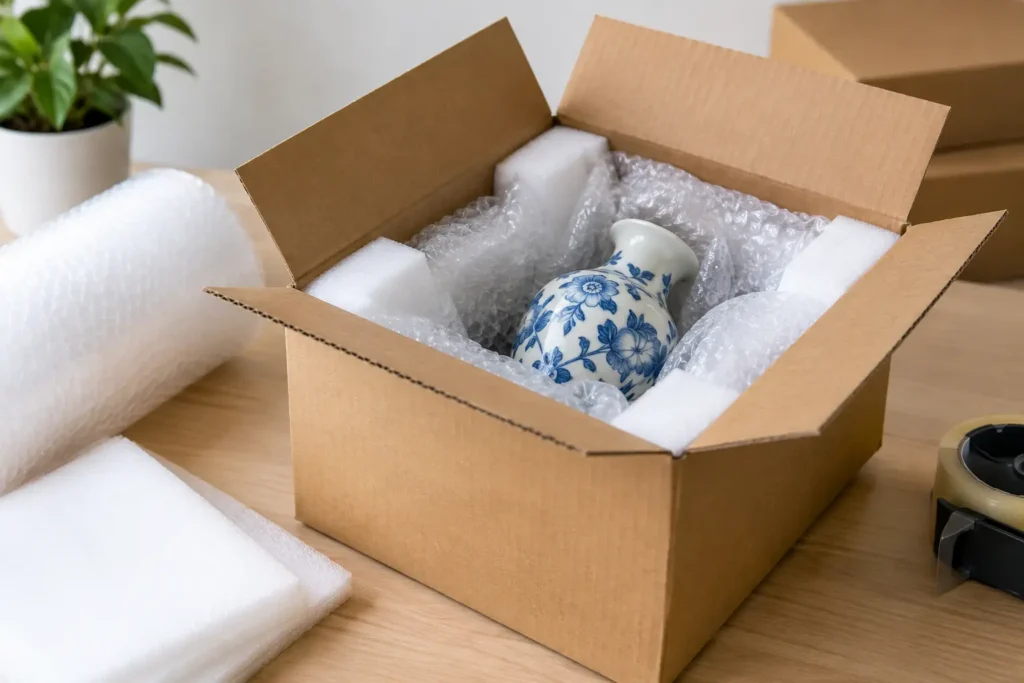
A box of dishes can look perfectly packed at the front door and still arrive with broken plates if the carton is too thin, too large, or poorly supported inside. Choosing the best boxes for fragile items is not just about buying something labeled “moving box.” It is about matching the box’s strength and shape to what it needs to protect.
For a local move across town or a long-distance relocation, fragile belongings face more than a few bumps in the road. They are lifted, stacked, loaded, unloaded, and sometimes stored. The right cartons, combined with careful packing, help protect the items that make a house feel like home.
What Makes a Box Safe for Fragile Belongings?
A good fragile-item box should be clean, dry, rigid, and sized appropriately for its contents. New moving boxes are usually the safer choice. Used cartons may have hidden weaknesses from moisture, crushed corners, or old tape residue. A box that looks fine on the outside can lose strength quickly once weight is added.
For breakable items, look for corrugated cardboard rather than lightweight retail boxes. Corrugated boxes have a fluted layer between two flat sheets of cardboard, which gives the carton its cushioning and stacking strength. Double-wall cartons add another layer of protection and are often worth the investment for dense, valuable, or unusually fragile belongings.
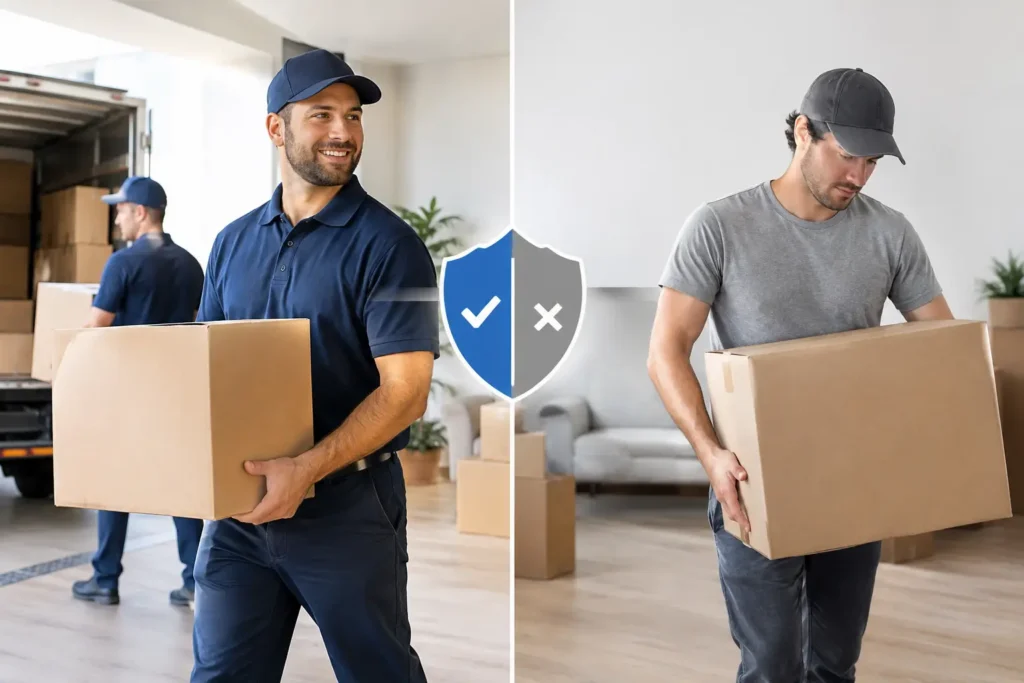
Size matters just as much as strength. Large boxes invite overpacking, and heavy fragile items become difficult to control when the carton is too big. Small and medium cartons are generally the safest choice for glassware, dishes, books, collectibles, and small electronics. A properly packed box should be heavy enough to be efficient, but light enough for one person to lift safely.
The Best Boxes for Fragile Items by Category
Different belongings need different protection. One all-purpose moving box may work for linens or lightweight décor, but it is rarely the best option for everything breakable.
Dish Pack Boxes for Plates, Glassware, and Kitchenware
Dish pack boxes, often called dish barrels, are among the strongest cartons available for household moves. Their thick, double-wall construction is designed to handle the concentrated weight of plates, bowls, mugs, serving dishes, and glassware.
These boxes work best when every item is individually wrapped and packed vertically where possible. Plates are less likely to crack when placed on their edges rather than stacked flat. Fill empty spaces with crumpled packing paper, not loose items that can shift during transport. A dish pack box is a smart choice for a full kitchen, but it can be excessive for a few mugs or wine glasses. In that case, a small sturdy carton may be easier to handle.
Small Double-Wall Boxes for Dense Breakables
Small double-wall cartons are ideal for compact but heavy belongings, including crystal, ceramic figurines, framed tabletop photos, small lamps, and dense decorative pieces. Their smaller size naturally limits the weight of the finished box, which reduces the risk of a dropped carton or a bottom that gives out.
Use a generous layer of crushed packing paper on the bottom before adding wrapped items. Pack the heaviest pieces first, keep similar items together, and leave no open gaps. If an item can move when you gently shake the sealed box, it needs more cushioning.
Picture and Mirror Boxes for Flat Items
Standard cartons are not a reliable choice for framed artwork, mirrors, or glass tabletops. These pieces need picture and mirror boxes, which are narrow, adjustable cartons designed to fit flat items upright.
Wrap the item first, protect corners with foam or cardboard corner guards, and use two matching box sections if the frame is larger than a single carton. The goal is a close fit without pressure against the glass or frame. Do not lay packed mirrors flat beneath other moving boxes. Keep them upright and clearly marked so they receive appropriate handling.
Electronics Boxes for TVs and Computer Equipment
Whenever possible, use the original manufacturer’s box for a television, monitor, desktop computer, or other electronic equipment. These cartons were made for the item’s exact dimensions and usually include fitted foam supports.
If the original box is unavailable, choose a purpose-made TV or electronics box with adjustable foam padding. Avoid wrapping a TV in a blanket and placing it in an oversized carton. Blankets can provide surface protection, but they do not prevent shifting. Screens and internal components need a snug, cushioned fit and should be transported upright.
Specialty Crates for High-Value or Awkward Pieces
Some belongings need more than cardboard. Antiques, sculptures, large artwork, marble pieces, delicate instruments, and other high-value items may require a custom crate. Crating provides a rigid outer structure and can be built around the item’s dimensions.
This option costs more than a standard moving box, so it is not necessary for everyday household goods. It is appropriate when replacement would be difficult, an item has significant financial or sentimental value, or the shape makes it hard to secure safely in a carton.
Box Strength Is Only Half the Protection
Even the strongest carton cannot protect an item that is loose inside. Fragile packing works as a system: the outer box resists pressure, the wrapping protects surfaces, and the cushioning absorbs movement.
Start with a cushion of packing paper at the bottom of the carton. Wrap each piece separately, paying extra attention to handles, stems, corners, and lids. Nesting items such as bowls can save space, but each piece still needs paper between it and the next one. Avoid letting glass touch glass, ceramic touch ceramic, or metal edges rest directly against a delicate surface.
Bubble wrap can be useful for especially delicate pieces, but it is not a substitute for a correctly sized box. It also works best when secured with tape so it stays in place. For everyday kitchen items, clean packing paper often creates a tighter, more stable pack than excessive bubble wrap.
Once the box is full, add cushioning at the top before closing it. The carton should close without forcing the flaps down. A bulging box is more likely to split, while a half-empty box allows contents to shift.
Common Box Choices That Create Problems
Many moving damages begin with well-intended shortcuts. Grocery boxes and liquor boxes may seem sturdy, but their condition varies widely. They can carry odors, moisture damage, stains, or weak points that are not obvious until they are loaded.
Oversized boxes are another common issue. They are tempting for lamps, kitchenware, and decorative items because everything appears to fit, but a large carton quickly becomes too heavy and difficult to stabilize. Larger fragile items need larger boxes only when their dimensions require it, not simply because there is more room available.
Plastic bins can be useful for some belongings, especially when storage is involved, but they have limits. Hard plastic provides protection against moisture and crushing, yet fragile contents can slide against the sides if the bin is not packed tightly. Bins also become very heavy when loaded with dishes or books. For breakable household goods, a quality corrugated carton with proper cushioning is often easier to carry and stack safely.
How to Seal and Label Fragile Boxes
Use quality packing tape, not masking tape, painter’s tape, or string. Seal the bottom of every carton with the H-tape method: one strip along the center seam and additional strips across both side edges. Repeat the same pattern at the top after packing.
Label each box with the room, a general description of its contents, and “FRAGILE” on more than one side. Labels do not make a box indestructible, but they help movers and family members understand that the carton should stay upright and should not be stacked under heavier items. For boxes containing glassware or plates, adding “THIS SIDE UP” can provide another useful handling cue.
Keep an inventory of valuables separately, especially for artwork, electronics, antiques, and heirlooms. Photos taken before packing can also be helpful for organization and peace of mind.
When Professional Packing Is the Better Choice
Packing fragile belongings takes time, materials, and attention to detail. If you are preparing for a large move, have valuable specialty items, or simply need to reduce the pressure of moving week, professional packing can be a practical option. Experienced movers know how to select the right carton, distribute weight, protect vulnerable points, and load fragile boxes securely in the truck.
Absolute Moving & Storage helps customers handle the details that can make a move feel overwhelming, from careful packing to safe transport and storage. Professional support is especially valuable when damage risk, time constraints, or physical lifting concerns make a do-it-yourself approach less comfortable.
The best choice is not always the most expensive box. It is the box that fits the item, supports its weight, leaves room for proper cushioning, and can be carried safely. Give your fragile belongings that level of care before moving day, and they will have a much better chance of arriving ready for the next chapter.