The elevator is booked for 10 a.m., your lease starts tomorrow, and suddenly the move that sounded simple feels packed with small details that can go wrong. That is exactly why apartment moving tips first time movers can actually use matter so much. An apartment move is not just about getting boxes from one address to another. It is about timing, building rules, parking access, packing smart, and avoiding the kind of last-minute problems that turn a manageable day into a long one.
Why apartment moves feel harder than they look
A first apartment move often seems smaller than a house move, but it comes with its own complications. Shared hallways, narrow stairwells, loading zones, service elevators, and strict move-in windows can create delays even when you do everything else right. If you are moving into or out of a condo building, you may also need proof of insurance, a damage deposit for the elevator, or advance notice to management.
This is where planning matters more than muscle. You do not need a perfect move. You need an organized one. The more decisions you make before moving day, the fewer rushed choices you will make when you are tired, short on time, and trying to find your phone charger.
Apartment moving tips first time movers should start with early
The best first move is not lifting a box. It is building a simple timeline. Start at least three to four weeks before your move if possible. That gives you enough time to sort your belongings, get supplies, notify the right people, and reserve anything your building requires.
Call both buildings early and ask direct questions. Can movers use the front entrance? Is there a loading area? Do you need to reserve the elevator? Are there hours when moving is not allowed? Small policies can affect the entire schedule, especially if you are coordinating help from friends or hiring professionals.
It also helps to know what you are really moving. First-time movers often pack everything they own, then realize on moving day that half of it did not need to come. Apartment living usually means tighter storage, fewer closets, and less room for duplicate items. If something is broken, unused, or too large for the new layout, it is often better to let it go before it takes up space in the truck and the apartment.
Pack for access, not just for storage
A lot of packing advice focuses on fitting items into boxes. That matters, but access matters just as much. When you arrive at the new apartment, you will not want to open ten boxes just to find sheets, medication, or a phone charger.
Pack one essentials bag or bin for the first 24 hours. Include toiletries, basic cleaning supplies, a towel, a change of clothes, medications, important documents, chargers, paper towels, snacks, and anything you need for pets or children. Keep that set of items with you, not buried in the truck.
Label boxes by room, but go one step further and label by priority. Mark a few as open first. Those should include kitchen basics, bedding, and bathroom items. This is a simple step, but it changes the first night from chaotic to manageable.
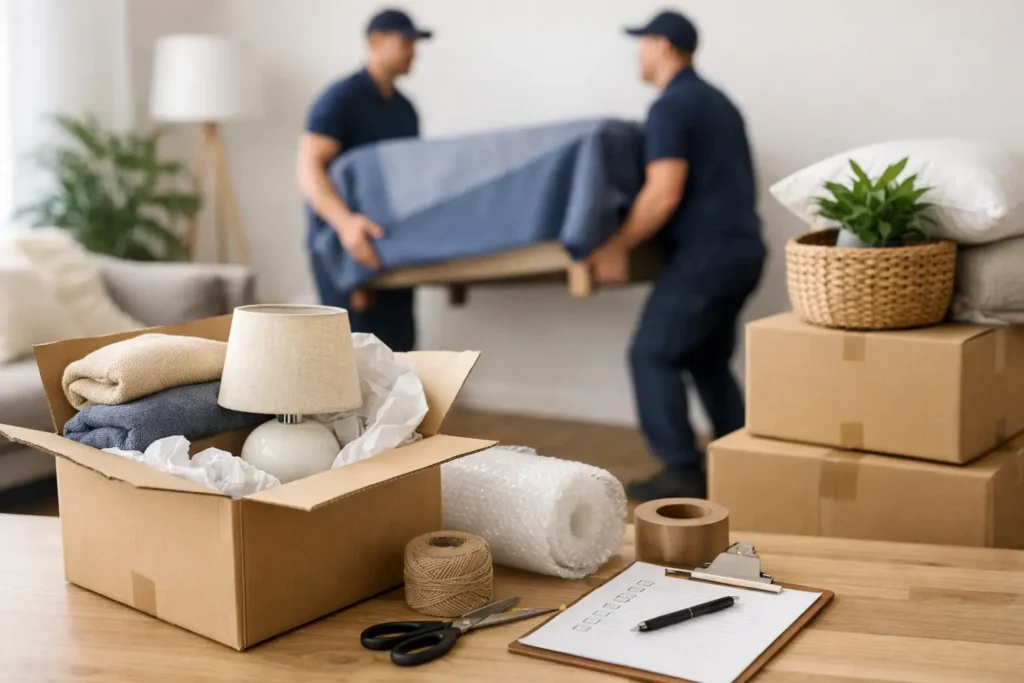
Heavy boxes are another common mistake. Books, dishes, and small appliances add weight fast. Use smaller boxes for dense items and medium boxes for lighter household goods. A box that is too heavy is harder to carry, more likely to break, and more likely to damage what is inside.
Protect your furniture and your building
Apartment moves usually involve more turns, tighter entrances, and more shared surfaces than people expect. That means your couch is not just at risk. So are walls, door frames, and elevator interiors. If your building charges for damage, one rough corner can become an expensive lesson.
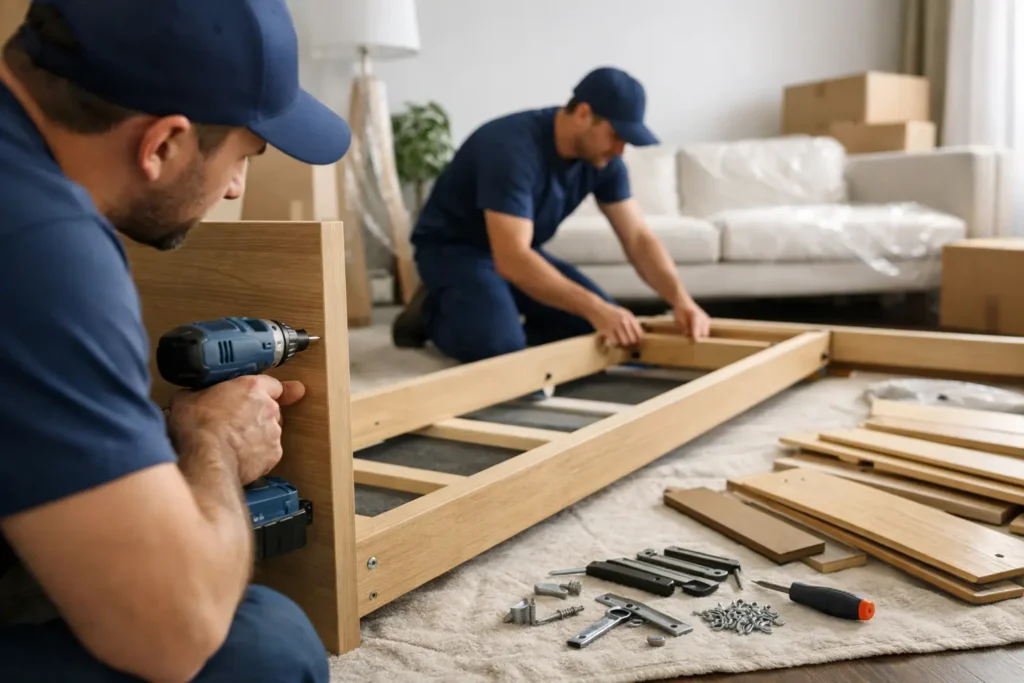
Disassemble what you can before moving day. Remove table legs, bed frames, shelves, and anything else that makes furniture awkward to carry. Keep hardware in labeled bags taped securely to the item or placed in a clearly marked container. Wrap furniture with moving blankets or padding, especially pieces with wood edges, glass, or fabric that can snag.
If you are moving yourself, measure larger pieces before the move. Compare them to elevator dimensions, stairwell width, and door openings. It is much better to learn a sectional will not fit while you still have time to adjust than while blocking a hallway with a line of waiting tenants behind you.
Don’t underestimate the logistics outside the apartment
Many first-time movers think mostly about the apartment itself, but curb access can be just as important. If the truck has nowhere legal or convenient to park, every box takes longer. In busy neighborhoods, a poor parking setup can add a surprising amount of time and frustration.
Check whether your building has a designated loading area and whether it needs to be reserved. If street parking is the only option, review local rules ahead of time. Some areas have restrictions for larger vehicles, short unloading windows, or permits. If you are relying on friends with cars instead of a truck, remember that multiple small trips can seem cheaper but often cost more in time and energy.
This is one reason many people choose full-service support for apartment moves. Professional movers know how to plan around access issues, protect shared spaces, and keep the move moving on schedule. For renters who are balancing work, lease deadlines, and building rules, that experience can remove a lot of pressure.
Utilities, paperwork, and address changes matter more than you think
A smooth apartment move is not only about what happens on moving day. It is also about what is ready when you arrive. Set up electricity, internet, and any building access requirements before move-in day whenever possible. Waiting until after the move can leave you surrounded by boxes in a dark apartment with no Wi-Fi and no clear fix.
Update your address with your bank, employer, insurance providers, subscriptions, and any services tied to billing or deliveries. If you receive medications or sensitive documents by mail, do not leave this until the last minute. Missing one important address update is more common than people think.
Take photos of the apartment when you move in and when you move out. This protects you if there are later questions about damage, cleanliness, or the condition of the unit. It takes a few minutes and can save a lot of stress.
Moving day goes better when the plan is simple
On moving day, try not to keep adding tasks. Your goal is not to multitask your way through the day. Your goal is to follow the plan you already made. Make sure walkways are clear, boxes are sealed and labeled, and fragile items are separated properly.
If friends are helping, give them simple directions. Tell them which items are fragile, which room each box should go to, and what should stay with you. Too many verbal instructions in the moment usually create confusion. A clear label system does more than repeated explanations.
If you are working with movers, be available and prepared. Point out any items that need special handling, confirm building instructions, and keep your phone close in case access issues come up. A reliable moving crew can do a lot to reduce stress, but communication still matters. Companies like Absolute Moving & Storage build their service around that kind of clear coordination because apartment moves leave less room for guesswork.
The first night in your new apartment
The smartest moves continue after the truck is unloaded. Do not try to unpack everything at once. Make the apartment livable first. Set up the bed, stock the bathroom, plug in chargers, and get the kitchen basics in place. Once those essentials are handled, the rest can happen room by room.
It also helps to pause and notice what does not fit your new space or routine. A first apartment move teaches you quickly which items earn their place and which ones create clutter. That is normal. The first week in a new apartment is part setup, part adjustment.
If the move felt more complicated than expected, that does not mean you handled it poorly. It means apartment moves have details that are easy to miss the first time. The good news is that a little planning, the right support, and realistic expectations can make the whole process feel far more controlled.
A first apartment move rarely goes exactly as imagined, but it can still go well. Focus on the decisions that reduce risk, protect your time, and make the first night easier. When the day is organized, the new place starts to feel like home a lot faster.