A dresser that looks manageable in the bedroom can feel twice as heavy once it starts tipping, scraping, or catching on a doorway. That is usually the moment people realize how to move heavy furniture safely is less about strength and more about planning, technique, and knowing when not to force it.
Heavy furniture moves go wrong in familiar ways. Someone lifts with their back, a sofa gets wedged in a stairwell, a table leg snaps under pressure, or a rushed pivot leaves gouges across hardwood floors. The good news is that most of these problems are preventable. With the right preparation, the right equipment, and a realistic view of the risks, you can protect your home, your furniture, and yourself.
Why heavy furniture is risky to move
The biggest hazard is not always the weight itself. It is awkward weight. A solid wood dresser may be top-heavy. A sectional may be bulky but hard to grip. A filing cabinet may seem straightforward until the drawers shift and throw off the balance.
That is why safe moving starts before the first lift. You need to know what you are moving, how it will travel through the space, and whether the item should be carried, slid, disassembled, or handled by professionals. There is no prize for muscling through a move that could have been made safer with a better plan.
How to move heavy furniture safely before lifting anything
Start by clearing the route completely. Remove rugs, shoes, cords, decor, and anything else that can create a trip hazard. Open doors fully and measure tight spots such as hallways, stair landings, elevator openings, and entry doors. If the item barely fits, do not guess. Measure the furniture too, including diagonal dimensions if it needs to rotate.
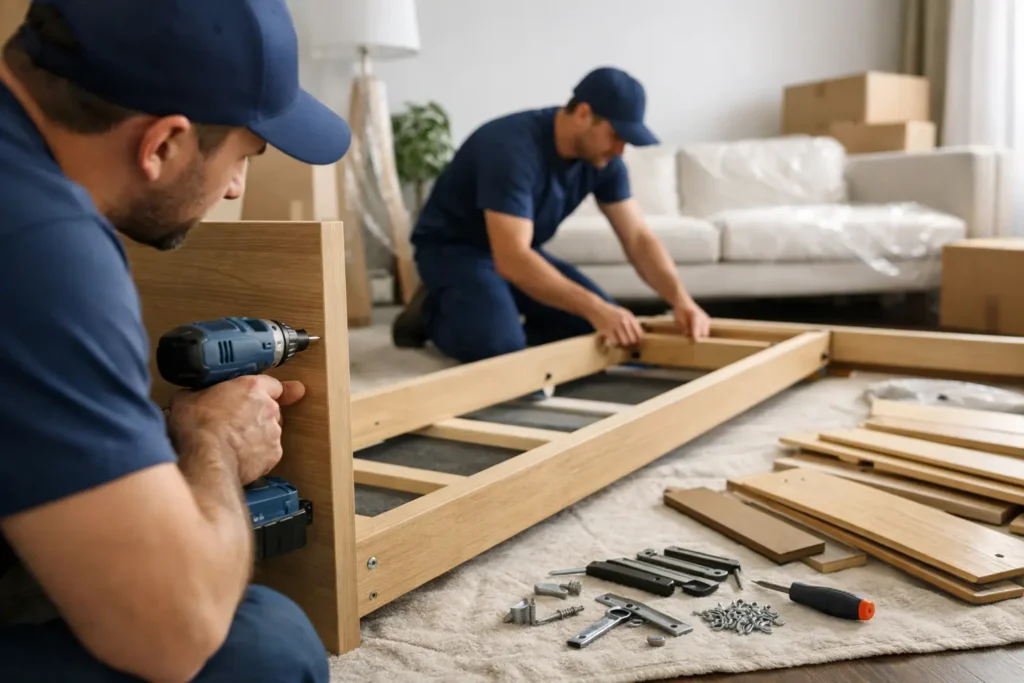
Next, reduce the weight where you can. Empty drawers, shelves, and cabinets. Remove cushions from sofas. Take glass shelves out of bookcases and entertainment units. If legs, shelves, or detachable parts can come off safely, remove them and keep the hardware together in a labeled bag.
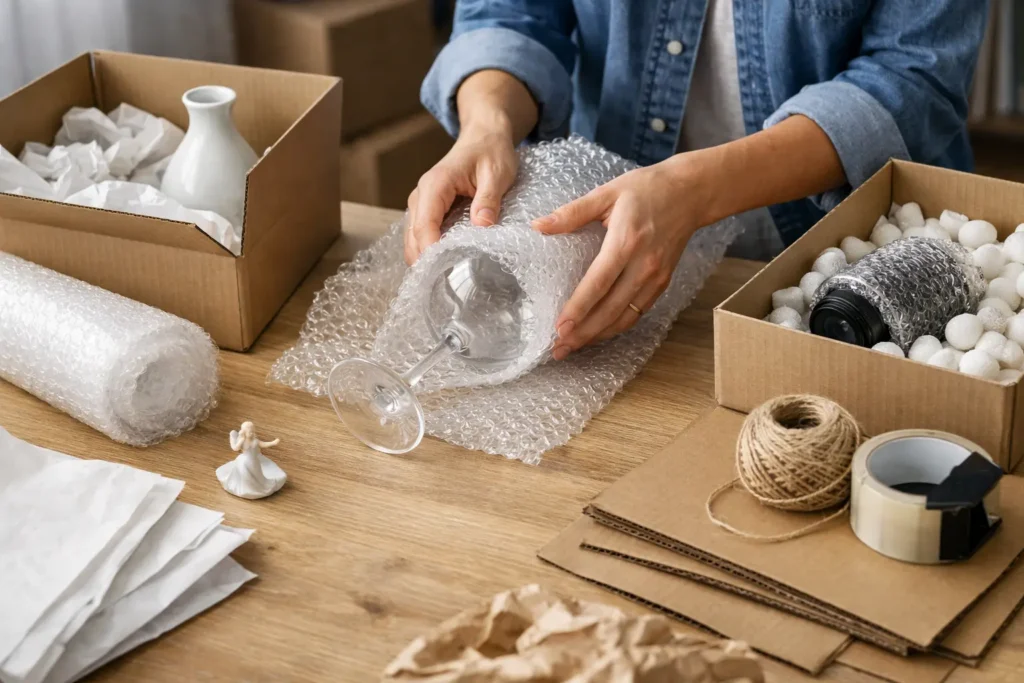
Protect the home as well as the furniture. Floor runners, cardboard, or moving blankets can help shield hard surfaces from scratches. Padding the corners of the furniture matters too, especially when you are navigating walls and narrow turns.
Use the right equipment, not just extra effort
One of the most common mistakes is trying to replace proper tools with more force. That usually leads to injury or damage. A few basic moving tools can make a major difference.
Furniture sliders are useful for moving heavy items across hardwood, tile, or low-pile carpet without dragging. A four-wheel dolly works well for dressers, boxes, and compact furniture with a stable base. An appliance dolly is better for taller, heavier items that need to stay upright, such as large cabinets or safes.
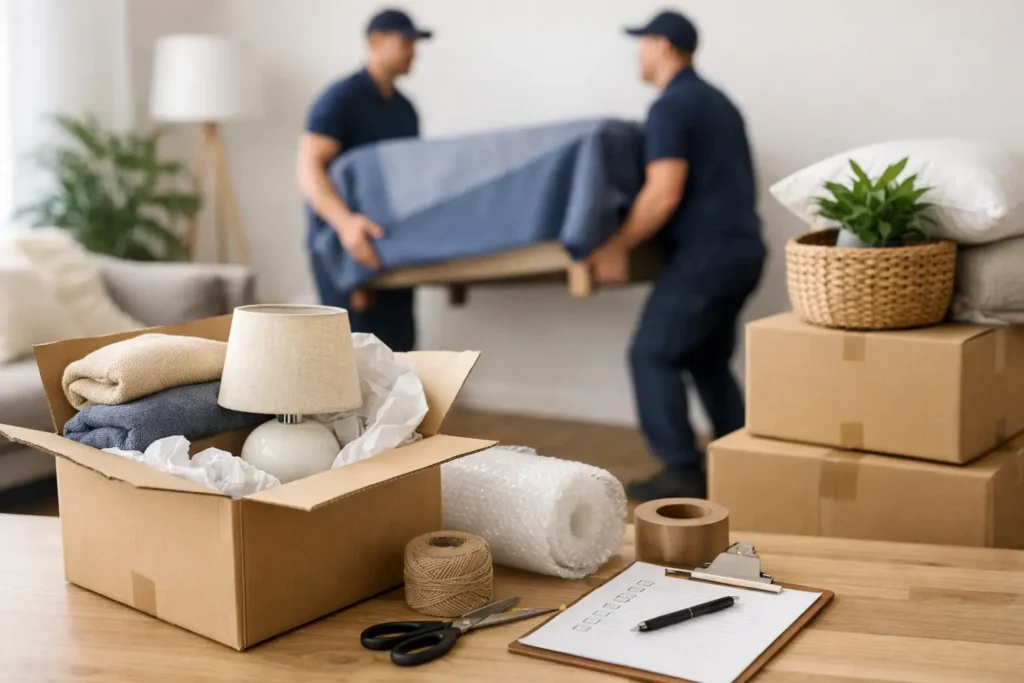
Lifting straps can help distribute weight, but only if the people using them understand how to coordinate their movements. Work gloves improve grip and reduce hand strain. Moving blankets protect finishes and help prevent dents when an item has to be rested against a wall or floor.
Equipment helps, but it does not solve every problem. A dolly is great on flat ground and much less helpful on stairs. Sliders can protect floors, but they do not control an item that wants to tip forward. Safe moving still depends on judgment.
Lifting technique matters more than strength
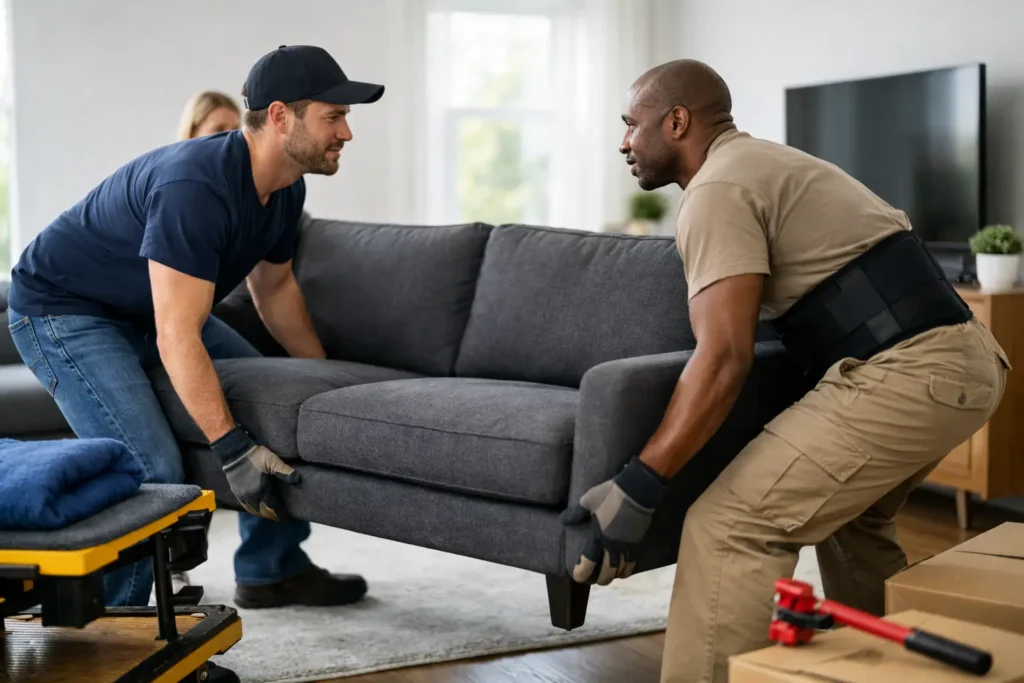
If an item must be lifted, do not start by bending at the waist and grabbing wherever your hands land. Stand close to the furniture, keep your feet shoulder-width apart, bend your knees, and lift with your legs. Keep the item close to your body to reduce strain.
Avoid twisting while carrying. If you need to change direction, move your feet instead of turning your torso under load. Slow, deliberate movement is safer than trying to rush through a doorway or down a hallway.
Communication matters when two or more people are carrying the same item. Agree on commands before lifting. Simple calls such as “lift,” “stop,” “lower,” and “pivot” keep everyone moving together. If one person loses grip or balance, the others need to know immediately.
Moving specific pieces of furniture
Some furniture requires a slightly different approach. Sofas and sectionals are bulky more than they are impossibly heavy. Standing a sofa on its end can help it fit through narrow doors, but only if it is wrapped and controlled carefully. Watch the feet and corners, since those are often the first points of contact with walls.
Dressers and chests should be emptied before moving, even if the drawers seem secure. Leaving contents inside adds weight and increases the chance of shifting. If the piece is tall, keep it upright whenever possible so the center of gravity stays predictable.
Dining tables often move best when disassembled. Removing legs can turn a difficult, awkward lift into a much simpler carry. Glass tabletops should be wrapped thoroughly and transported separately, never balanced loosely against other furniture.
Beds are usually easier to move in parts. Take apart the frame, secure bolts and brackets, and protect headboards and footboards from scratches. Mattresses can be awkward in tight staircases, so mattress bags are worth using to keep them clean and easier to grip.
Stairs, tight corners, and elevators change the plan
Flat ground is one thing. Stairs are another. If you are moving heavy furniture up or down stairs, the person on the lower end usually carries more weight. That makes balance, strength, and communication even more important.
Take one step at a time and keep the path clear. If the item blocks the carriers’ view, stop and reposition rather than moving blind. For especially heavy pieces, stair moves are often where professional help makes the most sense.
Tight corners require patience. Sometimes a small change in angle solves the problem. Sometimes the item simply needs partial disassembly. Forcing furniture around a turn is how upholstery tears, frames crack, and walls get damaged.
In apartment or condo buildings, measure elevators early. Do not assume a piece will fit just because it fit through the unit door. If an item cannot travel safely in the elevator, you may need a service elevator, a stair carry, or a different moving strategy entirely.
Know when not to move it yourself
This is the part many people skip. Not every heavy furniture move should be a DIY job.
If the item is extremely heavy, unusually valuable, fragile, oversized, or difficult to maneuver, the safer choice is often professional movers. The same is true if you are dealing with stairs, icy walkways, narrow condo corridors, or a lack of reliable help. An injury costs far more than a planned moving service.
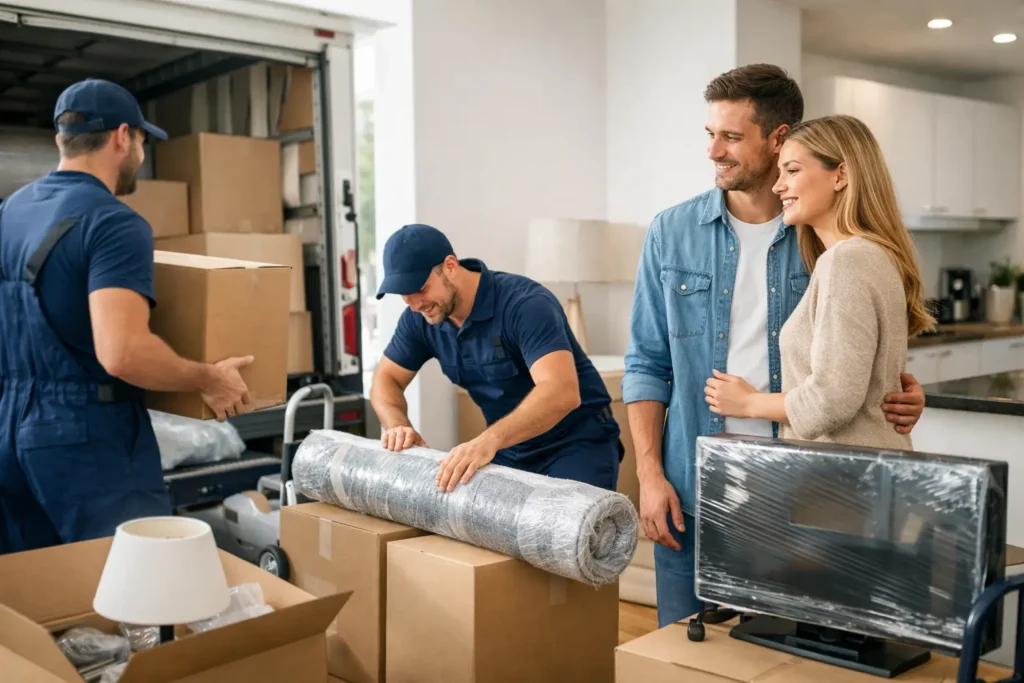
There is also a difference between moving something and moving it well. If you are trying to preserve antique furniture, protect newly finished floors, or avoid delays on moving day, professional handling reduces risk in a way brute effort cannot. A licensed and insured moving team brings equipment, experience, and a process designed for this exact kind of work.
Common mistakes that lead to injuries and damage
Most moving injuries come from preventable decisions. People underestimate the weight, overestimate their lifting ability, or skip equipment because the move is “just quick.” That mindset is where strains, slips, and damaged furniture start.
Dragging heavy items directly across floors is another frequent mistake. It may seem faster, but it can damage the furniture base, tear carpet, and leave scratches that are expensive to repair. The same goes for lifting with drawers full, carrying without a clear route, or trying to manage a piece alone that clearly needs two or three people.
Fatigue matters too. Late in the move, when people are tired and trying to finish fast, form gets sloppy and communication breaks down. That is often when accidents happen.
A safer way to approach moving day
The safest moves are organized, not rushed. Set aside enough time, gather proper supplies, and treat heavy furniture as a job that needs coordination. If a piece can be lightened, disassembled, padded, or rolled instead of carried, do it. If the path is tight or the weight is questionable, stop and reassess.
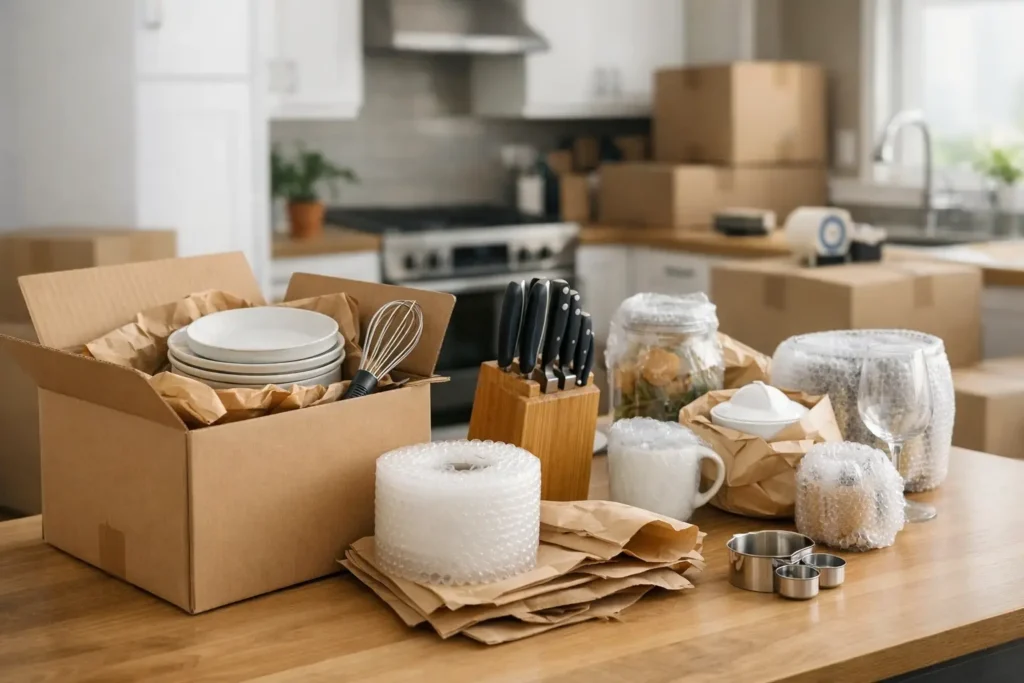
For many homeowners, renters, and businesses, the smartest move is a mix of DIY and professional support. You may handle boxes and lighter items yourself while bringing in experienced movers for the large, awkward, or high-risk pieces. That approach often saves time and significantly lowers the chance of injury or damage.
At Absolute Moving & Storage, that is exactly how we think about heavy-item moving – not as a test of effort, but as a job that deserves planning, care, and the right handling from the start.
If a piece of furniture makes you hesitate, pay attention to that instinct. A careful plan is always better than a painful lesson.