A piano is not simply a heavy piece of furniture. Its weight is uneven, its finish is easy to damage, and its internal components can be affected by a hard bump or sudden change in position. If you are researching how to move a piano, the first decision is not which truck to rent. It is whether the move can be completed safely with the right people, equipment, and route.
An upright piano can weigh 300 to 800 pounds. Grand pianos may weigh 500 to well over 1,000 pounds. That weight is concentrated in places that are not always obvious, which makes a piano difficult to control even for strong people. Planning carefully protects the instrument, your home, and everyone helping with the move.
Decide Whether a DIY Piano Move Makes Sense
A ground-floor upright piano moving a short distance through wide, level doorways is very different from a baby grand going down stairs, around tight landings, or into a long-distance moving truck. The more obstacles involved, the more the risk increases.
Professional help is usually the right choice when stairs, narrow hallways, sharp turns, delicate flooring, difficult weather, or a large piano are involved. It is also wise to hire trained piano movers if the instrument has sentimental or high financial value. Damage from one uncontrolled shift can cost more than professional handling, particularly if the piano, walls, railings, or floors need repair.
A DIY move may be reasonable only when the piano is an upright model, the route is short and level, and you have enough capable adults who understand the plan. Do not rely on a few friends lifting by hand. A piano requires proper equipment and coordinated movement, not just effort.
Plan How to Move a Piano Before You Lift
Measure the piano, every doorway, hall, elevator, turn, and vehicle opening. Account for baseboards, handrails, door hardware, and low ceiling areas. If a door can be safely removed to create more clearance, arrange that before moving day rather than trying to force the piano through a narrow opening.
Walk the full path from its current position to the truck and then from the truck to its destination. Look for slippery exterior steps, loose rugs, uneven pavement, snow, ice, and places where movers will need to turn. Confirm where the truck can park. A long carry over a driveway or sidewalk adds fatigue and creates more opportunities for an accident.
The route should be cleared completely. Move smaller furniture, décor, cords, and children’s items out of the way. Keep pets in a separate room or with a family member while the piano is in motion. A clear path allows the team to focus on balance and communication.
Gather the right equipment
Piano moves should not begin without the tools needed to protect the instrument and maintain control. At minimum, you will need:
- Heavy-duty moving blankets or padded covers
- Stretch wrap or packing tape to secure the padding, never directly on the finish
- A piano dolly or heavy-duty furniture dolly rated for the piano’s weight
- Straps designed for moving heavy furniture
- Floor protection, such as Masonite, cardboard, or furniture sliders suited to the surface
- Work gloves with grip and closed-toe shoes
Do not use lightweight hand trucks, bungee cords, or improvised straps. They can fail under the load. Likewise, avoid placing a piano on standard furniture casters and attempting to roll it across a room. Piano casters are designed to support the instrument in place, not to carry it over thresholds or uneven surfaces.
Prepare and Protect the Piano
Remove sheet music, lamps, framed photos, and any loose items sitting on or inside the piano. Close and lock the keyboard lid if it has a lock. If it does not, secure it gently with a padded wrap so it cannot open during transport. Never tape directly to wood, lacquer, or veneer because adhesive can pull up the finish.
Wrap the entire piano in moving blankets, paying particular attention to corners, pedals, legs, and the keyboard area. Secure the blankets snugly with stretch wrap around the padding. The goal is to prevent scratches and reduce damage if the piano brushes a wall or door frame.
Protect the home as carefully as the instrument. Cover hardwood floors and vulnerable surfaces along the travel path. Place padding on tight corners, stair rails, and door frames where contact is possible. This preparation takes time, but it is far easier than repairing dents, gouges, or broken trim after the fact.
Moving an Upright Piano Safely
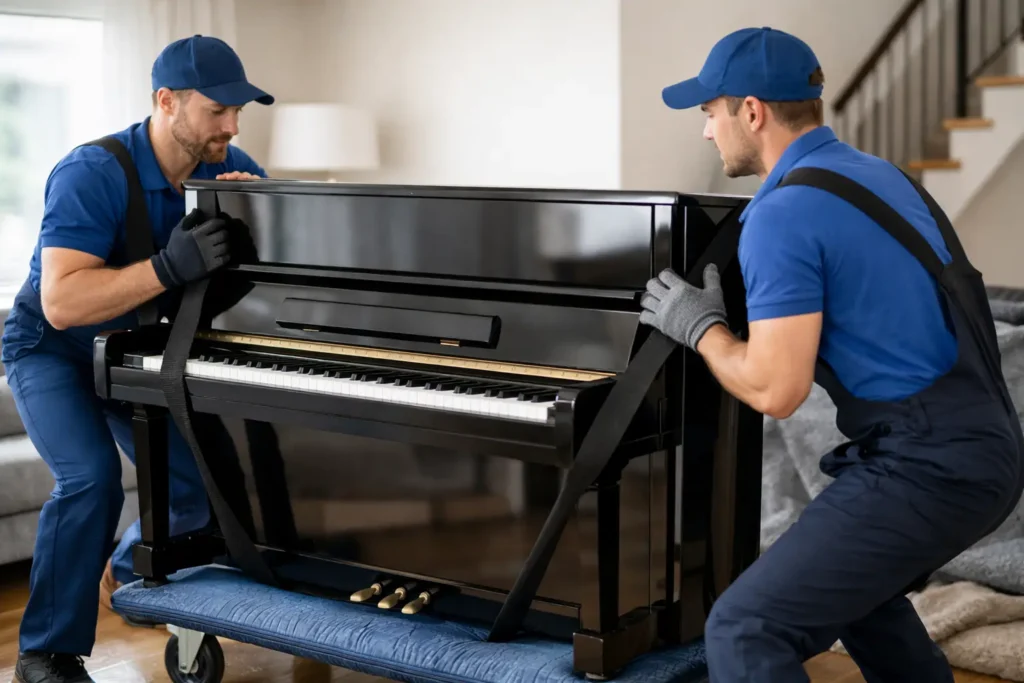
For an upright piano, keep the instrument upright at all times. Laying an upright piano on its side can put stress on internal components and create an unstable load. Place the piano on a properly rated piano dolly, using enough people to guide and stabilize it without placing hands or feet beneath the instrument.
Move slowly and communicate clearly. One person should call each step, turn, stop, and change in direction. Avoid sudden movements. If someone loses grip, feels the weight shift, or cannot continue, stop immediately and set the piano down only if it can be done safely.
At thresholds and ramps, the piano needs extra control. The team should move it straight across rather than at an angle whenever possible. Do not rush to keep up with a truck schedule. A few additional minutes spent repositioning the dolly is better than a preventable injury or damaged piano.
Once at the truck, use a loading ramp that can safely handle the combined weight of the piano, dolly, and movers. Keep the piano upright inside the truck, against a secure wall or load-bearing position. Use professional-grade tie-downs to prevent shifting. Blankets protect the finish, but straps prevent movement.
Grand and Baby Grand Pianos Need Specialized Handling
Grand and baby grand pianos should generally be moved by trained professionals. Their legs are not designed to support the instrument during transport, and removing them requires a precise process. The piano is typically secured in a protective skid board or piano board, wrapped, and moved on its side using equipment designed for that purpose.
Trying to disassemble a grand piano without experience can damage the legs, pedal lyre, rim, soundboard, or finish. Reassembly also requires careful placement so the piano is stable and level in its new room. This is one of the clearest situations where specialized service provides real value and reduces risk.
Be Especially Careful on Stairs
Stairs change a manageable move into a high-risk job. The piano’s weight can pull downhill quickly, and a single missed step can result in serious injuries. Never attempt to carry a piano up or down stairs without a trained, adequately sized crew, proper straps, and a proven plan for the specific staircase.
Narrow or winding staircases may require additional equipment, temporary removal of doors or railings, or a different route entirely. In some cases, professional movers may use exterior access or specialized lifting methods. The right approach depends on the piano’s size, the property layout, and safe access points. There is no benefit in forcing a piano through a route that does not provide enough room.
After the Piano Arrives
Place the piano away from direct sunlight, heating vents, radiators, fireplaces, and exterior doors where temperature and humidity shift frequently. These conditions can affect the wood and tuning stability. Give the piano time to acclimate before scheduling a tuning.
Most pianos should be tuned after a move, especially if the relocation involved a significant change in temperature, humidity, or distance. Wait a few weeks if possible so the instrument can adjust to its new environment. If you notice sticking keys, unusual noises, or visible damage, contact a qualified piano technician rather than attempting repairs yourself.
A piano move is a job where careful planning matters more than speed. When the route is difficult or the stakes are high, a professional moving team can provide the equipment, protection, and steady coordination needed to move the instrument with confidence. Absolute Moving & Storage can help make specialized moves safer, more organized, and far less stressful from pickup through placement.