The kitchen usually looks manageable until you open the drawers. Then you remember the mugs, the glassware, the food containers without matching lids, the sharp knives, the half-used spices, and the appliances you forgot you owned. If you’re wondering how to pack a kitchen for moving without breakage, delays, or a pile of mismatched boxes, the key is to pack it in stages and treat it like the most fragile room in the house.
A kitchen is rarely hard because of size alone. It is hard because it mixes fragile items, awkward shapes, heavy cookware, and food that may or may not travel well. A smart packing plan keeps boxes lighter, protects breakables properly, and makes unpacking less frustrating when you arrive.
How to pack a kitchen for moving without the usual mess
Start earlier than you think you need to. Kitchens take longer to pack than bedrooms or living rooms because almost every cabinet holds a different type of item. Give yourself at least a few days if you’re packing on your own, especially if you cook regularly and still need access to basic essentials before move day.
Before you tape a single box, sort what is actually worth moving. Expired pantry goods, duplicate utensils, chipped plates, and small appliances you have not used in years are better dealt with now than packed, loaded, unloaded, and stored again. Moving is a good time to reduce weight and save space, particularly if you’re paying based on load size or distance.
Set aside a small group of kitchen essentials for the final day in your current home and the first day in the new one. This usually includes a coffee maker or kettle, a few plates and cups, one pan, one pot, basic utensils, dish soap, paper towels, and snacks. Pack that box last and label it clearly so it does not disappear under everything else.
Gather the right packing materials
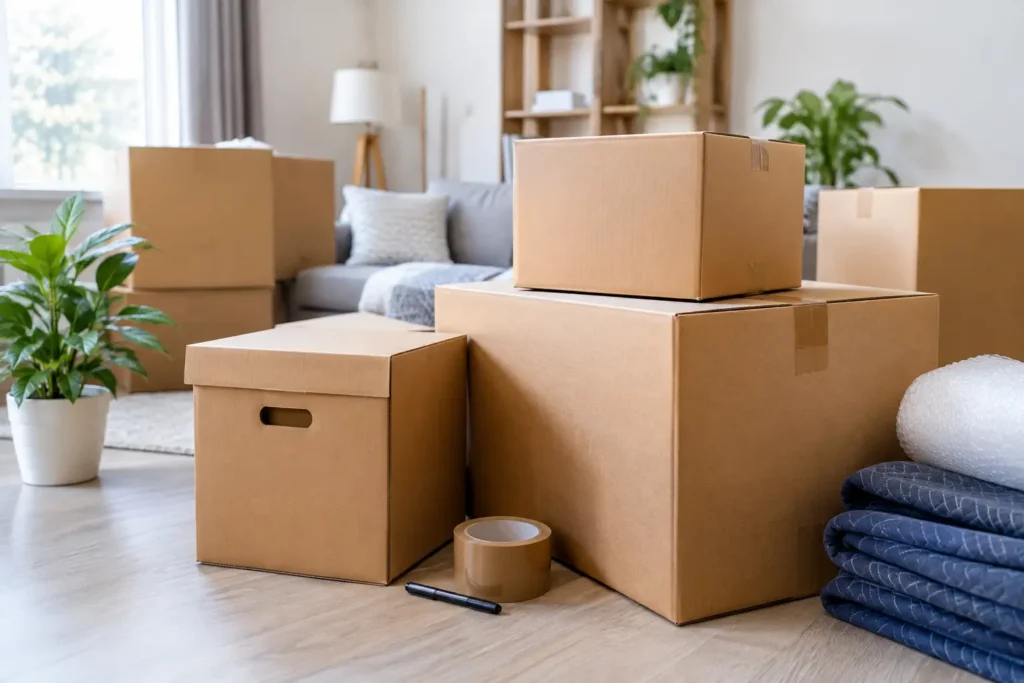
Kitchen packing goes better when the box matches the item. Heavy-duty small boxes are best for dishes, canned goods, and cookware because large boxes get too heavy fast. Medium boxes work well for lighter pantry items and plasticware. If you have many fragile pieces, dish pack boxes with thicker walls are worth using.
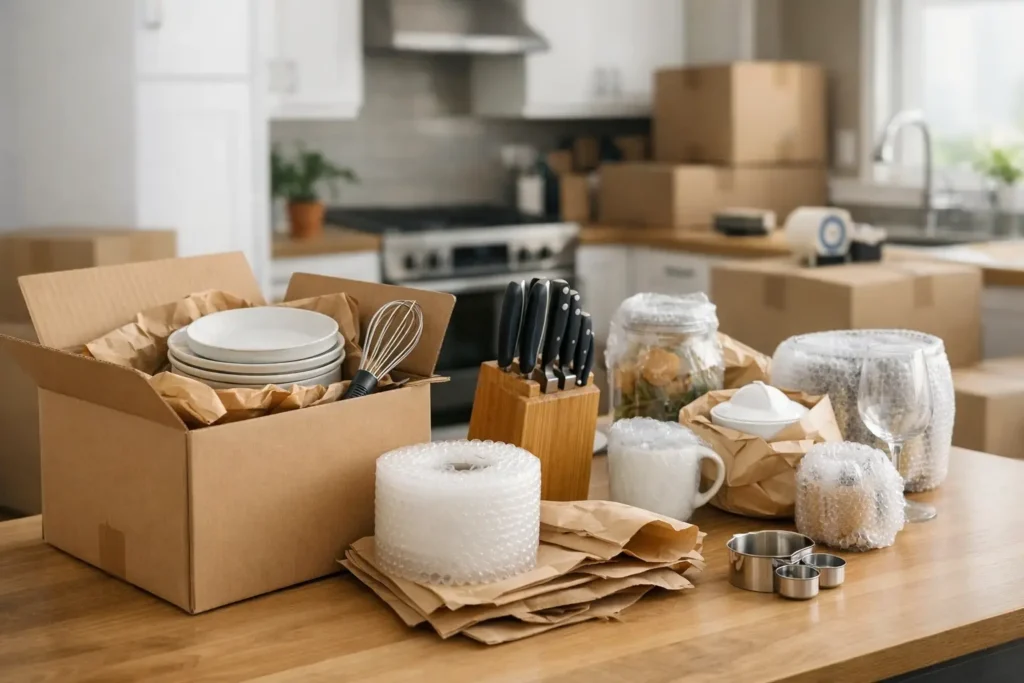
You’ll also want packing paper, bubble wrap for the most delicate items, strong tape, markers, and labels. Towels and dishcloths can help with padding, but they should support proper packing materials, not replace them completely. A wine glass wrapped in one thin towel is still a risk.
If you are using professional movers, ask what they recommend for especially delicate or high-value kitchen items. Some things, like oversized platters, espresso machines, or fragile serving sets, benefit from custom attention.
Pack pantry items carefully, not casually
Food seems simple until a bottle leaks or a bag of flour bursts in transit. Start by checking expiration dates and tossing anything stale, open, or unlikely to survive the move. This matters even more for long-distance relocations or moves that involve temporary storage.
Box dry goods upright and keep similar items together. Use sealed bins or zip-top bags for anything that could spill, such as sugar, rice, pasta, or baking ingredients. Glass bottles of oil, vinegar, or sauces should be wrapped separately and packed standing up in snug boxes. If something is already open and messy, it may be safer to use it up before the move.
Refrigerated and frozen food depends on timing. For a same-day local move, coolers may be enough for some items. For longer moves, perishable food often becomes more trouble than it’s worth. Plan meals around what you need to use first so you are not left making rushed decisions the night before.
The safest way to pack dishes and glassware
Most kitchen damage happens here. Plates, bowls, glasses, and mugs should be wrapped individually with packing paper. Stack plates vertically rather than laying them flat. It sounds counterintuitive, but dishes packed on their edges are less likely to crack under pressure.
Use a layer of crumpled paper on the bottom of the box before loading anything. Place heavier items on the bottom and lighter, more delicate items on top. Fill empty spaces so nothing shifts when the box is carried or loaded onto the truck. If the contents can move, they can break.
Glasses and stemware need more attention. Wrap each piece fully and cushion the stems well. Do not overpack a box just to save space. A slightly underfilled box with proper padding is safer than a tight box that puts pressure on every item.
Once a box is packed, seal it and label it as fragile along with the room name. A label will not prevent careless handling on its own, but it does help keep the box in the right place and reminds everyone to treat it appropriately.
Pack pots, pans, and small appliances by weight
Cookware is durable, but it gets heavy quickly. Nest pots and pans together with a layer of paper or soft cloth between them to prevent scratches. Lids should be wrapped separately or secured so they do not slide around and chip nearby items.
Small appliances need a little more planning. If you still have the original box for a stand mixer, blender, air fryer, or toaster oven, use it. If not, wrap each appliance, protect any glass parts, and pack cords neatly so they do not snag or get damaged. Removable pieces should be packed together in labeled bags or small boxes.
This is where many people make a common mistake: they put too many heavy kitchen items in one large box. Even if the box holds, it may be unsafe to lift and more likely to collapse from the bottom. Keep boxes compact and manageable.
Handle knives and sharp tools with extra care
Never place loose knives in a box, even if the blades are turned downward. Wrap each knife individually with packing paper and secure the wrapping with tape so it cannot slip off. Then place the knives in a clearly marked container or knife block if you are moving the block too.
Skewers, graters, peelers, and other sharp tools also need containment. Group them carefully and make sure they cannot poke through the side of a box. This protects both your items and the people carrying them.
What to do with odd-shaped kitchen items
Cutting boards, baking sheets, trays, and platters often fit poorly in standard boxes. Pack them vertically like records, with padding between each piece. This reduces pressure and saves space. Mixing bowls can be nested with paper between them, while plastic containers can be grouped with lids packed in one separate bag or box.
If you have a particularly delicate serving platter or sentimental item, do not treat it like a standard dish. Extra wrap, extra support, and a dedicated box are usually worth it.
Label for unpacking, not just loading
A box marked kitchen is better than nothing, but it is not enough. Label boxes by zone or category, such as plates, pantry, baking tools, coffee station, or everyday cookware. That makes unpacking faster and helps movers place boxes where they belong.
You can also mark priority boxes. If you know you will need basic cooking gear on day one, make that obvious. Good labeling reduces the chaos after the truck is unloaded, which is when many people realize they packed efficiently but not practically.
When professional packing makes sense
Some people want to pack the kitchen themselves. Others would rather hand off the most fragile room in the house and know it is being packed with the right materials and methods. Both approaches are reasonable.
If you are short on time, managing a family move, handling a long-distance relocation, or worried about expensive dishware and appliances, professional packing can take a major source of stress off your plate. A company like Absolute Moving & Storage approaches kitchen packing with the same focus that matters on moving day: protection, organization, and careful handling from start to finish.
The right approach depends on your timeline, budget, and how much risk you want to manage yourself. Some customers pack pantry goods and non-breakables on their own, then leave dishes and glassware to professionals. That middle-ground option often works well.
Packing a kitchen is not about getting it done fast. It is about getting it done without creating problems for move day or your first week in the new home. If you pack deliberately, keep boxes light, and protect fragile items properly, the kitchen goes from the most dreaded room to one more task handled the right way.